
The not-so-spooky truth about bats
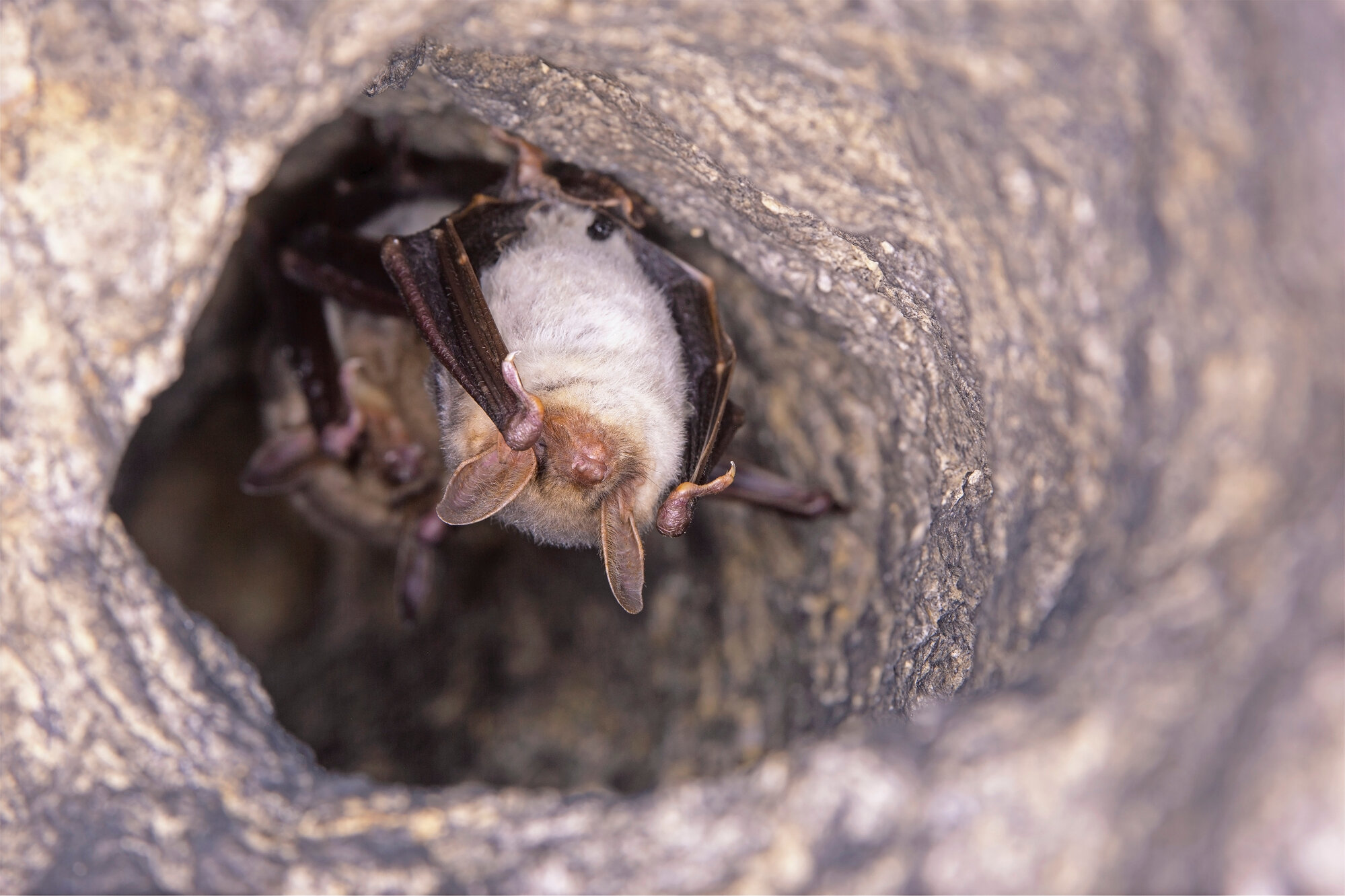
As Halloween brings bats into the spotlight, Clemson University bat ecologist Ben Neece separates fact from fiction, dispelling common myths about bats.
Myth: Bats fly into your hair
Bats may be a Halloween staple, but their spooky reputation doesn’t match how they behave in the wild. Neece says these small, often misunderstood mammals are more likely to avoid people than fly toward them.
“They’re likely afraid of you and trying to avoid you,” says Neece. “They’re not coming to get you.”
Fact: Bats are not blind
A common misconception is that bats are blind. Neece says the majority of bats use echolocation as their primary means of navigation and prey detection, while also relying on their eyesight.
Bats produce high-frequency sounds beyond the range of human hearing. These sounds bounce off objects, and bats process the returning echoes to judge the shape and distance of things around them.
While their ears help receive those sounds, Neece says, their brains process the information rapidly.
Fact: Bats are essential to the ecosystem
Bats live in a wide range of places, including cities and forests. Studying where they are found, which species are present and how diverse their populations are can help researchers learn about the habitats around them.
Bats are the only mammals capable of true flight, and many species feed on insects, while others feed on nectar. Together, bats provide important ecological benefits, including helping control insect populations and pollinating plants.
“Using the detections of bats and the species diversity that we find, we can understand the ecosystem’s overall health,” he says.
Myth: Bats only live in the United States
Bats are found nearly everywhere in the world except Antarctica, and their sizes and diets vary widely. Neece says many local species in South Carolina are small, while tropical species, such as flying foxes, are much larger.
Despite their association with Halloween, Neece says bats are worth understanding for the roles they play in the environment and are not animals people need to fear simply because they see them flying at night.
About Ben Neece
Ben Neece is the coordinator of the Southeast Bat Hub at Clemson University and a bat ecologist in the Department of Forestry and Environmental Conservation. His expertise focuses on bat ecology, including bat behavior, habitat use, species diversity and the important role bats play in ecosystems. Through research and data collection, Neece works to better understand bat populations and how they can provide insight into the health of the environments they inhabit.