
Past is Present, presented by Sumter Museum: Sumter's first Black and female police chief Patterson reflects on career of firsts, what it means to leave a lasting legacy
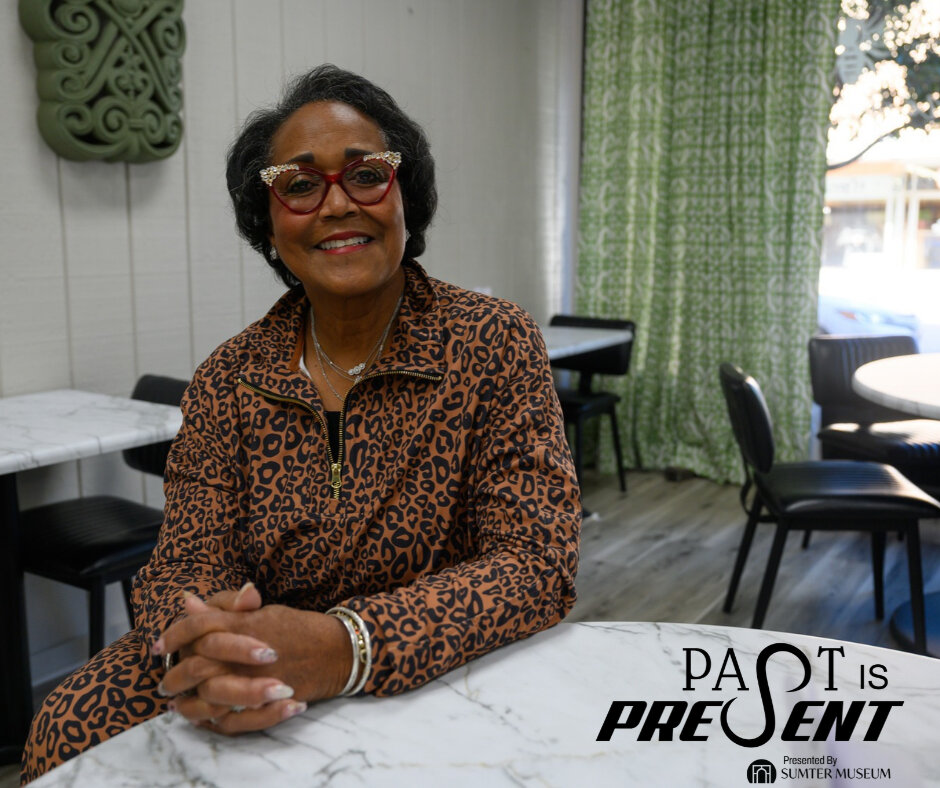

"Here am I. Send me!" Those words from the book of Isaiah have followed Patty Patterson through some of the most challenging rooms of her 32-year law enforcement career.
It was a career she never imagined, one that took her from one trailblazing position to the next. To be the first at something so that those after her believed they could do anything.
"It was not my dream," Patterson said. "But God knows the plans he has for you."
An Air Force child, she was born in Maine and followed her father's career through Texas, Georgia, Alaska, Florida and Missouri before the family settled in Sumter in 1973. She grew up constantly navigating being one of few or the only Black student in a room because of her military upbringing but never felt demeaned because of it. She credited her parents' teaching of "You treat people the way you want to be treated. It's about who they are, not what they are" as her foundation for how she treats others.
When she started seventh grade in Sumter, she was not prepared for the culture shock that came with the South. She recalled her older brother carrying her off the school bus, her eyes filled with tears at the culture shock. Being warned by other Black classmates not to talk to white students or she'd "get beat up." Being fearful of what would happen to her for befriending her white classmate, who turned out to also be a military kid. It was then that a young Patterson understood the weight of the color of her skin.
But, it didn't stop her desire to defy the odds. After tough conversations with her father and friends about her dreams of becoming a model or singer, she got serious about a career. She walked into the Sumter courthouse looking for work and ended up meeting the human resource manager who encouraged her to apply, even though it was nearly closing time. According to Patterson, the human resources manager sensed she "might be a good fit." Patterson was interviewed and was ultimately hired to be the county traffic court clerk.
The magistrate's office taught her to grow up fast. From warrants and bad checks to assaults, homicides and child abuse cases, the young woman raised on military bases was seeing how ordinary conflict could end in handcuffs. The role not only exposed her to a new side of Sumter, but also showed others what she could handle. Because of that, a friend of her father's who worked at SLED told her Sumter County Sheriff's Office was looking for a juvenile investigator and that the agency had never had a female deputy. She sat on the idea for three months, praying about it, before she told her family.
"They were like, 'No way, that ain't you,'" she recalled her family's reaction with a laugh. Her father wanted her to be a nurse; he was surprised she'd entertained the idea of law enforcement given she was squeamish about blood. But when the sheriff's office and a credit union both called with job offers on the same day, she took the badge.
Back then, training was thin. Unlike the training today, Patterson was sworn in, handed a badge and a gun and sent to work. Her father and a family friend who was a firearms instructor taught her to shoot a .38 special. True learning happened in the field, alongside her fellow deputies. But, it wasn't a warm welcome.
She recalled one deputy told her he liked her better at the magistrate's office. A woman hollered at her across the sheriff's office parking lot that if Patterson failed in this role, she would be failing every Black person in the state.
"I told her I'm not here for the Black people. I'm here for all people," she recalled. "I have to represent me and what I stand for first."
"The only person I have to prove myself to is myself, and the good Lord up above," she said.
Her heart, she said, was always with the kids. However, as rewarding as juvenile work could be, it could be just as devastating. She remembered driving teenagers to the Department of Juvenile Justice in Columbia and being baffled when some of them seemed excited to go. Some said it was the only place where they felt cared for, even if it wasn't genuine. Others said it was part of their "legacy" because their relatives were incarcerated, too. Patterson often cried on the drive back.
After completing police academy training in 1981, she was recruited to teach at the academy 1983 as a criminology instructor. She taught communications, report writing, crisis intervention, defensive driving, basic firearms training and interviewing techniques for sexual assault and child abuse/neglect cases. After roughly two years, then-academy director John O'Leary encouraged Patterson to pursue an offer from SLED, arguing that though he valued her work, staying at the academy would limit her growth. She came on at SLED as a special agent, working criminal investigations statewide, protecting governors and senators, and specializing in cases involving child abuse and sexual assault victims. When asked to join their SWAT team, the first woman ever invited to the team, she agreed on one condition: She would get the exact same training as everyone else. What followed were memories of her rappelling off a seven-story building, training in live-fire entry houses and riding the skids of a helicopter.
"Was I scared? Yeah, I was scared to death," she said. "But I knew that I had to try."
Eventually, Patterson asked to step back from the entry team to drive the SWAT truck and run communications, a role she said people sometimes dismiss. For her, it was about being willing to try. It's like her team's mantra, passed down from SLED's chief at the time, that came straight from Isaiah: "Here am I. Send me."
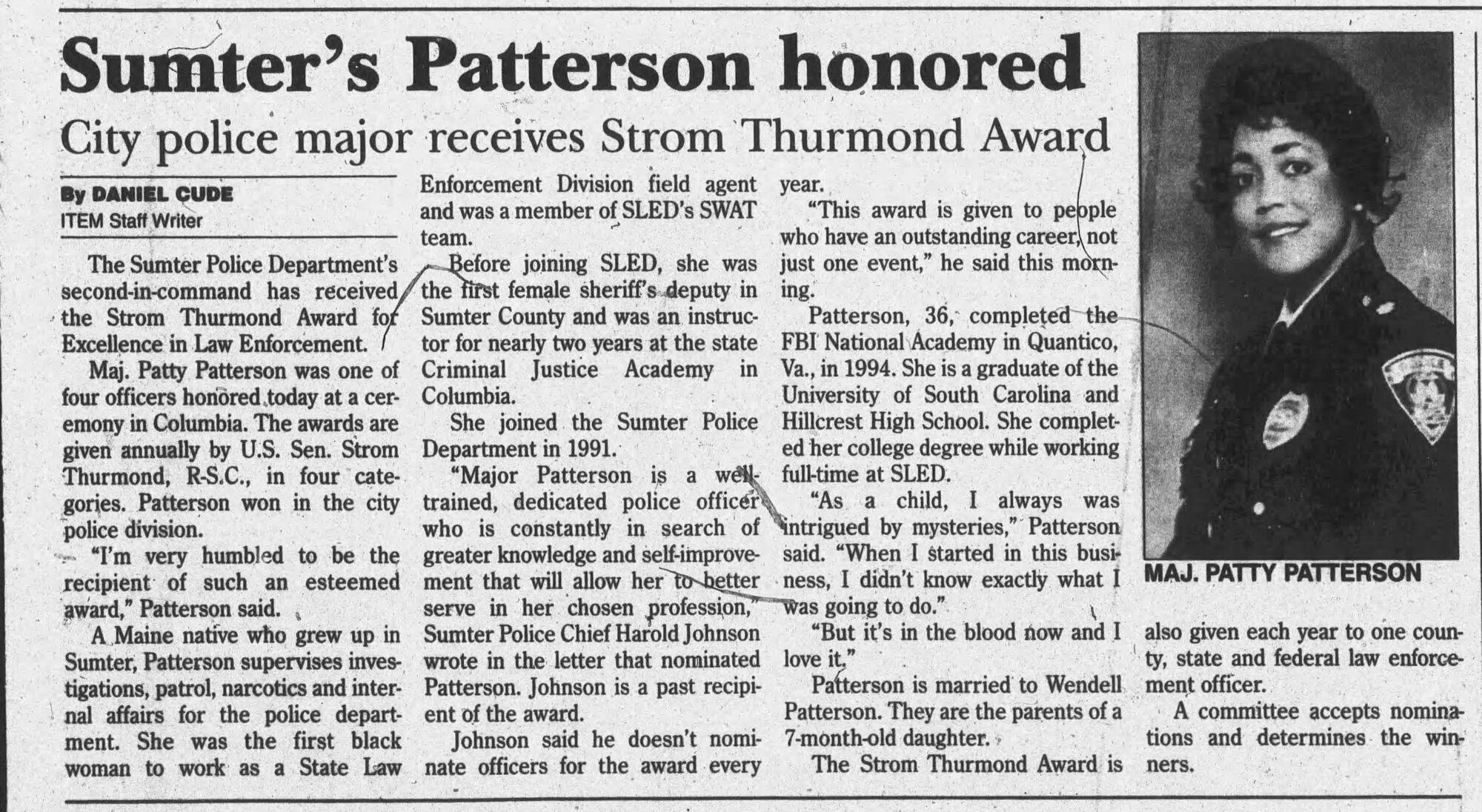
After six years with SLED, Patterson returned to Sumter and worked as a field agent for the Pee Dee Region. While working a gun case, she was approached by then-Sumter Police Chief Harold Johnson, who asked if she'd be interested in becoming his second in command. She nearly missed the application deadline because she was sequestered on a month-long death penalty case. Thanks to her father, who overnighted the paperwork to her hotel and hand-delivered the completed form to city hall before the 5 p.m. cutoff, Patterson became major in 1991.
But, not everyone was pleased about the milestone.
"My race was an issue. My being a female was an issue. They alleged that my credentials were false and I didn't have a degree, I didn't have this and I didn't have that," Patterson recounted with a shake of her head. "But all of that was not true."
The claims didn't hold up under state and federal reviews. Patterson went on to serve as second in command for 10 years. In that time, Patterson said she was the first woman from her department sent to the FBI National Academy in Quantico, Virginia -the pinnacle of her career, she said.
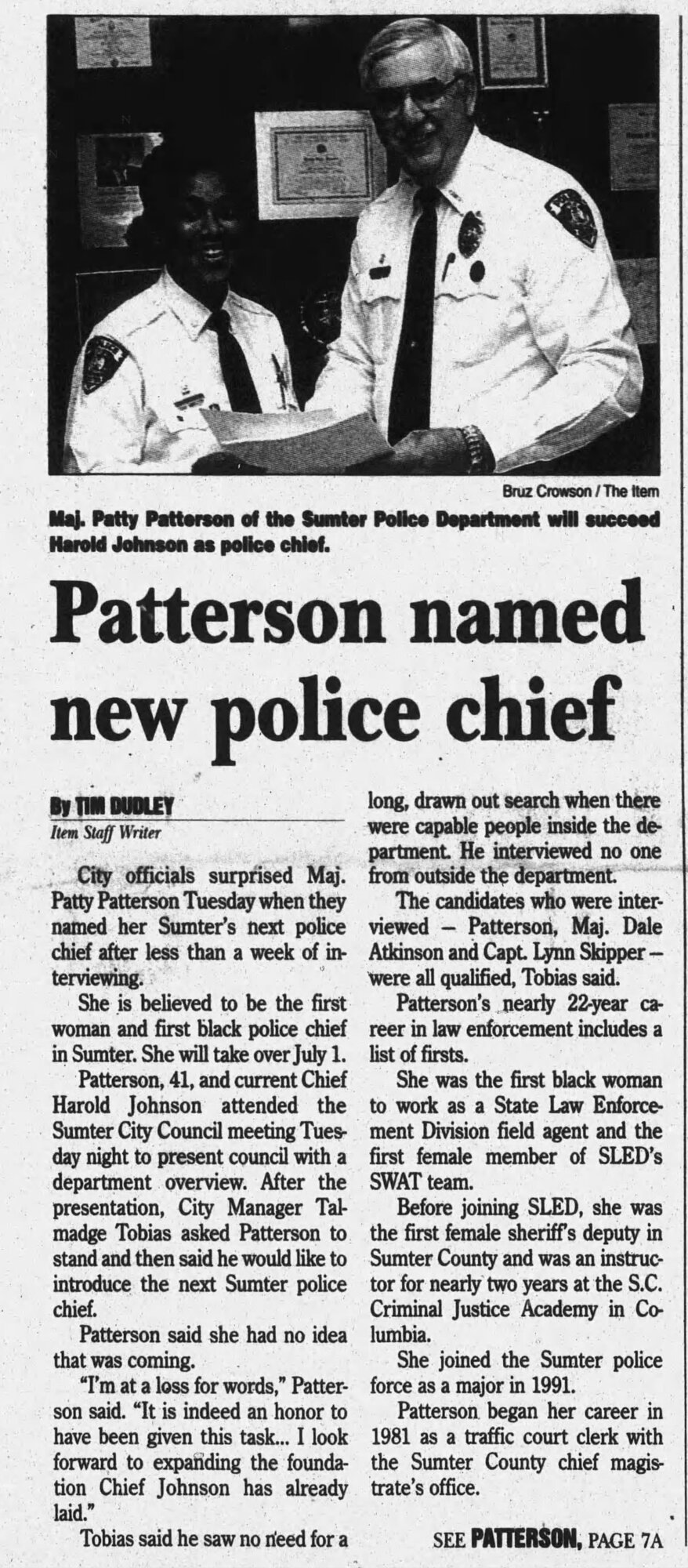
When then-chief Johnson announced his retirement, there were a number who threw their hat in for the job, including Patterson. As everyone worked to gather recommendations, or "get their horses in line," Patterson told her supporters that her work could speak for itself.
"Either they want me or they don't," she said.
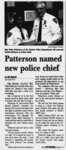
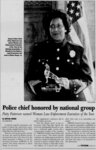
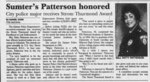
At a Sumter City Council meeting, history was made as she was announced as the first Black and female police chief in 2001.
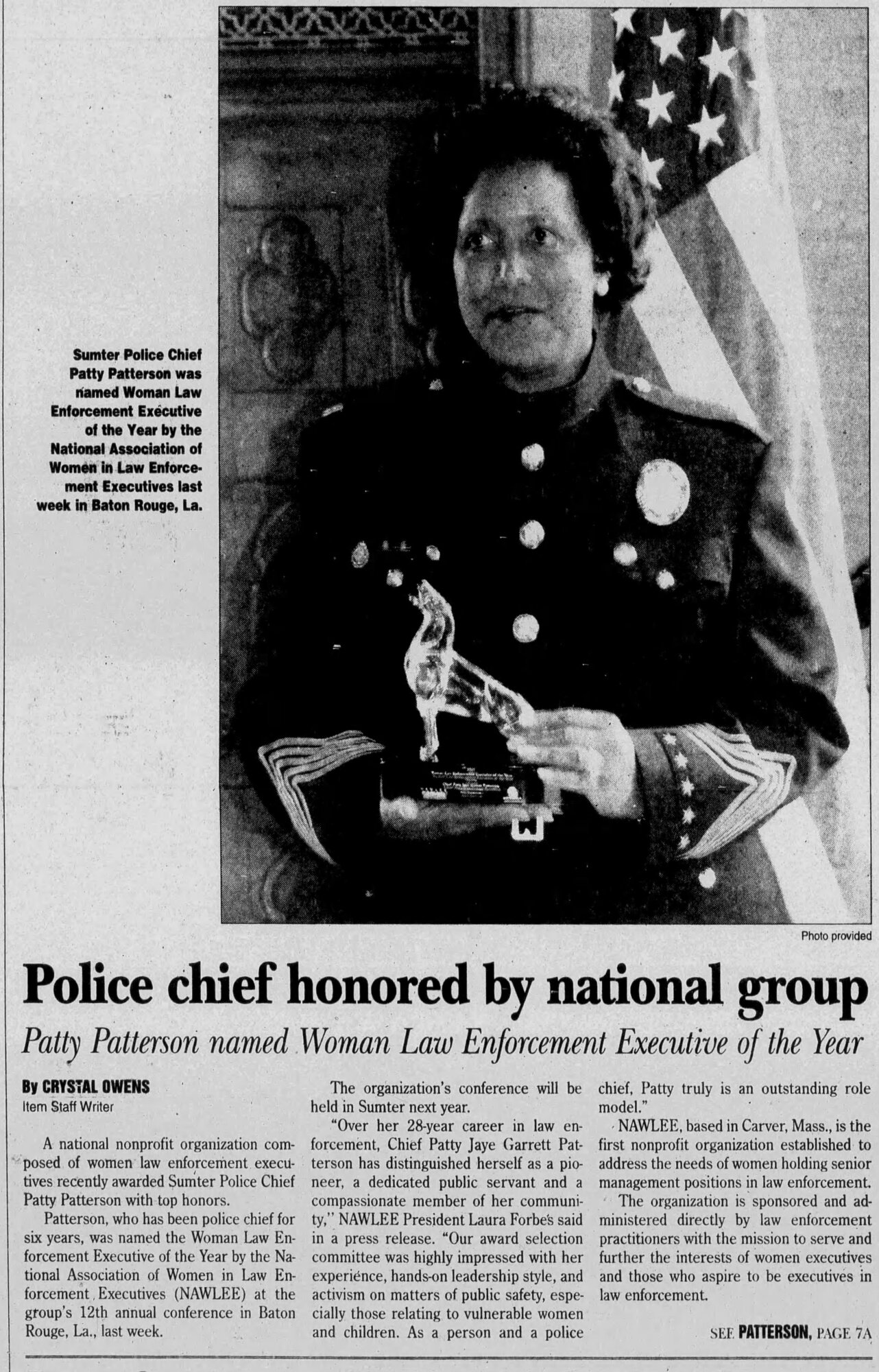
There are many accolades and accomplishments throughout her time at the helm that Patterson carries with pride to this day. Alongside fostering meaningful connections between the people and the police, she helped establish statewide peer support teams to provide debriefing and emotional/PTSD support for officers, telecommunicators, EMS and fire personnel after major incidents and negotiated a valuable community partnership that provided special permission to qualifying officers to attend the Airman's Leadership School at Shaw Air Force Base.
But, the most meaningful accomplishments are the ones she left to be completed in her stead.
After a decade as chief, Patterson retired from law enforcement in 2011 after 32 years - exceeding her initial 25-year goal. In 2018, she was invited to see the dedication of the new police department headquarters, a project she helped spearhead. She was moved to tears as she toured the modern facility, especially the new communications center. As "the heartbeat" of law enforcement, it was the most meaningful improvement, from a windowless upstairs room to a new space that allowed dispatchers to have natural light, their own break room and proper facilities.
Retirement hasn't slowed her down, just redirected her passion: connecting with the community. She wraps gifts at Simpson Ace Hardware, sings with Bethesda Church of God's Voices of Praise, speaks at churches and community events, stays involved with the local Girl Scout troops and serves as president of Sumter School District Foundation Board. She also enjoys the leisure trips she gets with her husband and daughter, who is a professional bass angler competing in the national circuit; their travels keep her calendar full as her daughter's "mom manager."
"I take orders. I don't give orders anymore," she said with a smile.
But, for those who know and respect Patterson's service, she remains Chief Patty. What she wants Sumter to take from her story isn't her lists of historic firsts. It's the idea that everyone is already leading someone, whether they know it or not. That, she said, is how a legacy is built.
"Dare to soar, dare to dream, dare to believe. Dare to want more and just exceed. Don't walk in my shoes. Step up to my shoes and walk out of my shoes and keep walking," she said.
For the positions she held, barriers she broke and milestones she reached, Patterson doesn't view her career as something she did alone. Her legacy is less about the titles and more about the faith she kept and her willingness to go wherever she was called.
"I'm just one woman, my hand in God's hand, trying to do the right thing."
The Sumter Item has been your trusted source for local news, sports, community stories and accountability reporting in Sumter, Clarendon and Lee counties for 132 years. To support our newsroom, consider making a tax-deductible donation below.