
S.C. House of Representatives District 51 (D): David Weeks, Melissa J. Weeks-Richardson
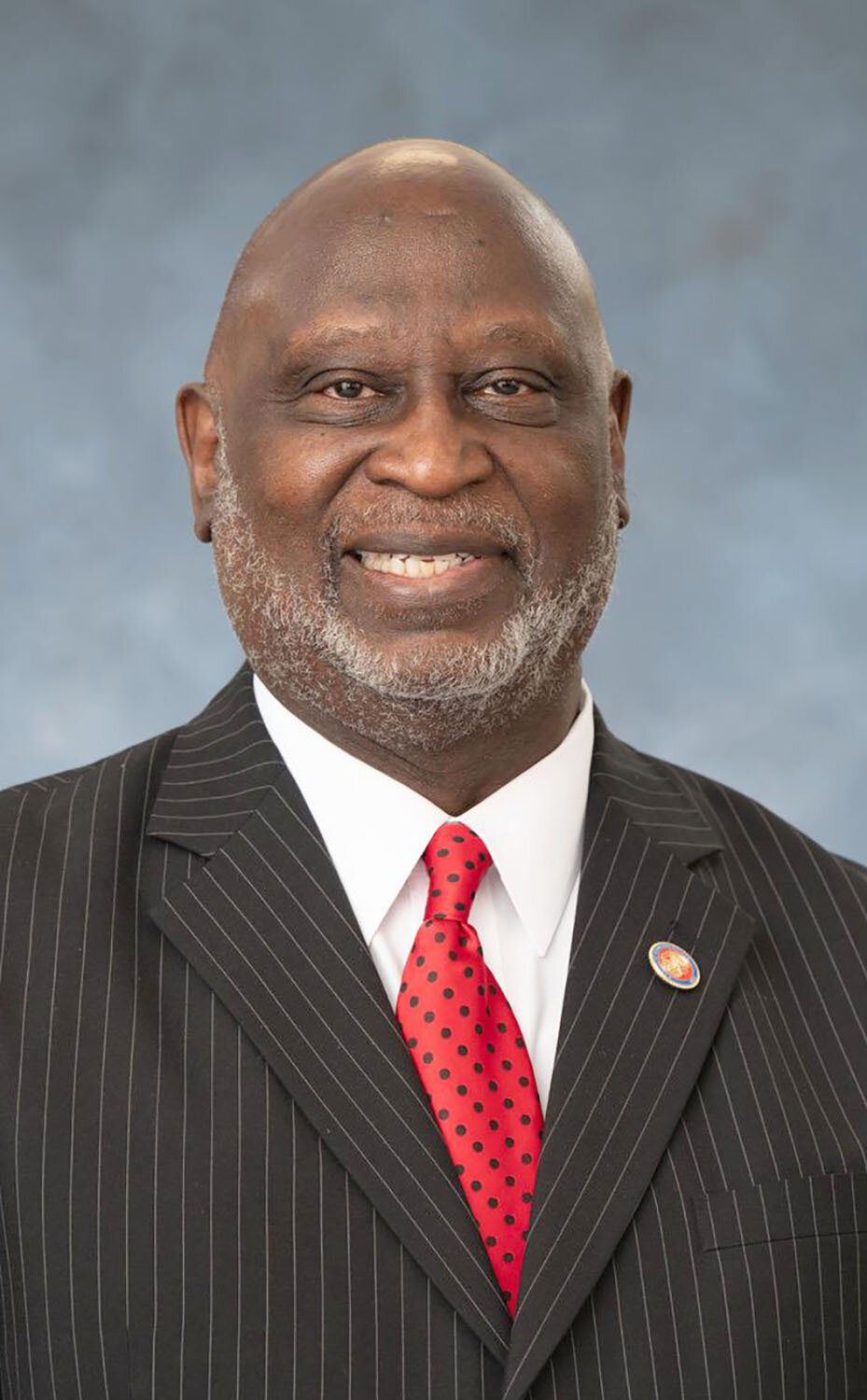
DAVID WEEKS
What are you running for?
S.C. House of Representatives District 51
Why are you running?
To continue outstanding service and commitment to the citizens of Sumter and to work as a part of Team Sumter to provide effective positive change for us all.
Have you run for political office before? If so, explain:
I am the incumbent who has served 26 years and feel that I have established a track record of accomplishment that I feel very comfortable running on.
How long have you lived in your district?
I am a lifelong resident of Sumter, having been born and proudly grown up on the Southside.
Current job/profession:
I am currently an attorney operating the Weeks Law Office LLC.
What makes you qualified for the seat?
I have a positive mindset for positive change, a commitment to uplift and instill pride in community uplift. I have demonstrated the ability to NOT lose touch with the electorate. I have a sensitivity to the concerns of everyday people, and I am proud of my background, education and political service experience. I have been actively involved in the community.
What challenges/concerns do you see in your district (up to 3), and how do you intend to improve them?
- There is a strong need for infrastructure improvement, to include paving, drainage and sidewalks. The Manning Avenue bridge replacement is a big positive step in linking the Southside with the rest of Sumter. I intend to continue working with the General Assembly, the city and the county of Sumter as part of the team that gets things done.
- I intend to continue addressing income disparity, small business and health care disparities by supporting efforts to expand Medicaid, support our community health clinics, insurance reform and hospital services.
- I intend to continue addressing problems with internet access, industrial recruitment and development, cultural and historical preservation and public education, including adult education. Also intend to develop a strategy to address concerns in the rural community, law enforcement and farmers.
What successes have you seen in your district that you want to build on?
Manning Avenue/Southside corridor development, North Main Street infrastructure improvement and improvements to infrastructure attracting business and industry, and support for Shaw Air Force Base preservation, commonsense land use and environmental preservation initiatives.
Are you actively involved in the community? How so?
Yes, serving on the SUATS Policy Committee, the Santee Lynches Regional Council of Governments, Jehovah Missionary Baptist Church, South Sumter Advocates, Lincoln Preservation, Phi Beta Sigma Fraternity and St. Paul Masonic Lodge #8, to name just a few.
Editor's note: These responses have been edited for clarity.
MELISSA J. WEEKS-RICHARDSON
What are you running for?
I am running for South Carolina House of Representatives District 51.
Have you run for political office before?
I was disqualified to run for Senate 35 because that was not in my district.
How long have you lived in your district?
Over 25 years
Current profession?
Pastor and author
What challenges / concerns do you see in your district, and how do you intend to improve them?
- Hate Crime Bill
In looking at the South Carolina Code of Laws 16-3-2410, it is noted that when a person commits a violent crime, note Section 16-1-60 defines what a violent crime is or commit assault by mob in the second degree 16-3-210 (c), and the trier of the fact determines beyond a reasonable doubt that the offense was committed against a victim who was intentionally selected, in whole or in part because of the persons' belief or perception regarding the victim’s race, color, religion, sex, gender, national origin, sexual orientation or physical or mental disability whether or not the perception is correct, the person is subject to additional penalties as provided in subsection (B).
(B) A person who violates provisions in subsection (A) which the section stated above and commits a violent crime as defined in 16-1-60 or commits assault by mob in the second degree 16-3-210(c) upon conviction is subject to an additional fine of not more than $10,000 and an additional term of imprisonment of up to 5 years.
However, you must jump down to subsection (D) which states that the additional penalties described in subsection (B) may not be imposed unless the person was indicted, either separately or as a separate count for the underlying offense pursuant to this section against the victim who was intentionally selected in whole or in part because of the person’s belief or perception regarding one or more of the factors provided in subsection (A) whether or not the perception is correct, and the person was found guilty of an underlying offense.
This is one area that I see some improvement with the Senator Clementa C. Pinckney Hate Crime Act but also where I see as a concern that must be built on. Statutes already point out what defines a hate crime. It is noted that a hate crime is a felony or misdemeanor motivated the perpetrator's prejudice usually intense bigotry based on the victim's race, color, national origin, ancestry, gender, religion, religious practice, age, disability or sexual orientation. These are often termed bias crimes or acts of intimidation (Blacks Law Dictionary, 10th Ed.).
According to the FBI in 2020, there were 8,263 incidents of biased-motivated crimes involving 11,470 victims that were reported to the FBI. However, this is what was reported during this time. The incidents that continuously renew interest in the applicability of federal laws governing hate crimes and just to name a couple were: Emmanuel African Methodist Episcopal Church in Charleston, South Carolina, and the killing of a counterprotester at 2017 United the Right rally in Charlottesville, Virginia, as well as various others. Although these were taken up on the federal level, it still hits home no matter where it took place even if it did not happen right in my neighborhood.
Let's look at a few specific incidents involving hate crimes or racially charged incidents handled by aggravated breaches of peace or investigated by federal authorities because South Carolina does not have a hate crime statute. South Carolina remains one of the only two states in the United States without statewide hate crime laws.
1. Racist vandalism (January 2022) The incident where there was a 17-year-old charged with aggravated breach of peace after digital sign on South Pike West was altered to display racial slur. This was investigated by Sumter Police Department.
2. Grocery store incident (April 2021) 27-year-old charged with aggravated breach of peace after a racially charged profanity disturbance on Wedgefield Highway.
It is pointed out that because South Carolina does not have a hate crime law so specific, incidents that might be labeled hate crimes may be or are often prosecuted under charges such as assault, harassment or aggravated breach of peace and, according to the Department of Justice, most of the hate crimes in South Carolina are driven by race, religion or sexual orientation.
I will reiterate that South Carolina is one of only two states in the U.S. without statewide hate crime statutes, and it is time that this is fixed.
2. Criminal justice reform
There are several key areas of concern when it comes to criminal justice reform, such as:
Sentencing reform
Police reform
Re-entry reform
The improving of public safety
(There is so much to get into when it comes to improving public safety and looking back at the gun laws and not just the gun laws or creating hate crime statute but also building on the crime statutes.)
3. Health care, disability and special needs
There are various areas under the health care umbrella from insurance to the health facilities to ensure that patients get the best care and that health care professionals [have] the best working environment as well as compensated and well-staffed facilities.
I think that one of the main things that I think is very important is policies and advocacy. Upgrading the laws, ensuring that there is enforcement of disability rights laws being sure that abuse and neglect is being prevented.
Improvement of accessibility and infrastructure as well as upgrading older facilities in South Carolina. Improvement [of] insurance [to make] sure that individuals can get the best medical care as well as those without medical disabilities are getting the best health care coverage and are able to get the best medical care. [Also, to ensure their] pharmaceutical needs [are met] without having [to] choose between medications, paying the doctor for an office visit, having to decide should they go to the hospital/medical facility to get treatment [or] wait it out because they owe medical bills. Improvements will have to be made with insurance companies as to what they will allow and how much they are paying the physicians. There are very good doctors, some that will even come to the patient's home and do house visits. But when you bill the insurance companies, if the charge is $80 for a home visit because the person is disabled or elderly and does not use video chat, the insurance company allows $30 but then they pay $22. Now, let's say that doctor had to drive 50 miles; they are not billing for gas. The doctor had to give an injection, as well as other do duties [like] check urine or something right there, but those tests are not allowed. The doctor is not getting paid. - I think that there are so many concerns. There are a lot of great things that have been done, but it’s time for an upgrade.