
Can you have too much cash?
One of the more interesting conversations we have with clients is not about taking more investment risk. It is about helping them understand the risk they may already be taking.
Many of the individuals and families we work with have built substantial wealth through successful businesses or concentrated ownership in private companies. Their largest asset is often the business they founded or the company that has employed them for decades.
Because so much of their net worth is already tied to one investment, many understandably become very conservative with the rest of their portfolio. They often prefer money market funds, certificates of deposit, municipal bonds, Treasury securities and other highly liquid investments.
At first glance, this approach seems prudent. If your business already represents a significant investment risk, why take additional risk in the public markets?
While this thinking is understandable, there is another risk that deserves equal attention: the long-term loss of purchasing power caused by inflation.
Cash is safe, but it is not risk free
Many investors equate cash with safety because the account balance does not fluctuate from day to day.
However, the value of cash should not be measured only by the number of dollars in the account. It should also be measured by what those dollars can purchase in the future.
Over long periods of time, inflation steadily reduces purchasing power. Even during periods of relatively modest inflation, cash that sits idle for years may buy considerably less than it does today.
Money market funds and certificates of deposit have become more attractive as interest rates have increased. However, history has shown that these higher yields rarely last forever. As interest rates eventually decline, investors who remain heavily allocated to cash may once again find themselves earning returns that struggle to help keep pace with inflation.
Concentration risk works both ways
Business owners often recognize that they have significant exposure to their company.
What is sometimes overlooked is that placing nearly all remaining assets into cash creates another type of concentration.
Instead of concentrating investment risk, the portfolio becomes concentrated in interest rate risk and inflation risk.
Neither extreme is ideal.
The objective is not necessarily to take more risk. The objective is to diversify the risks already being taken.
Diversification is more than the stock market
Many investors assume that diversification simply means purchasing a basket of publicly traded stocks.
In reality, diversification can take many forms.
Depending on an investor's objectives and qualifications, private investments may provide opportunities to broaden a portfolio while reducing reliance on any single asset or economic driver.
Examples include private infrastructure investments that own assets such as utilities, energy infrastructure, transportation networks and data centers. Other investors may gain exposure to private real estate, private credit, private equity or even institutional quality investments such as professional sports franchises.
These investments often have return characteristics that differ from both publicly traded stocks and traditional fixed-income investments.
They should not replace a diversified portfolio, but they may complement one by introducing additional sources of return that are not perfectly correlated with public markets.
The goal is better diversification, not more risk
One misconception is that adding private investments automatically means taking greater risk.
That is not necessarily true.
If an investor currently has most of their wealth concentrated in one private business and nearly all remaining assets invested in cash, introducing thoughtfully selected investments across multiple asset classes may actually reduce overall portfolio risk.
In many cases, diversification is less about increasing expected returns and more about reducing dependence on any single investment or economic outcome.
Every portfolio should reflect the entire balance sheet
One principle we frequently discuss with clients is that investment decisions should be made while considering their entire balance sheet.
A business owner whose company represents 80 percent of their wealth has a very different starting point than someone whose assets are already diversified across public markets.
The portfolio outside the business should complement the risk already embedded in the business rather than simply avoiding all additional investment risk.
Sometimes that still means maintaining meaningful allocations to high-quality fixed income for liquidity and stability. Other times it may involve incorporating public equities, international markets, private investments or alternative asset classes to improve diversification.
There is rarely a one-size-fits-all solution.
Final thoughts
Cash plays an important role in every financial plan. It provides liquidity, stability and confidence.
However, holding excessive amounts of cash for extended periods carries its own risks. Inflation quietly erodes purchasing power, and over time that can be just as damaging to long-term wealth as market volatility.
For many successful business owners, the answer is not necessarily taking significantly more risk. Instead, it is taking different kinds of risk through thoughtful diversification.
The goal is not simply to protect wealth from market fluctuations. It is to build a portfolio that helps protect wealth from concentration risk, inflation and the unexpected challenges that inevitably arise over a lifetime.
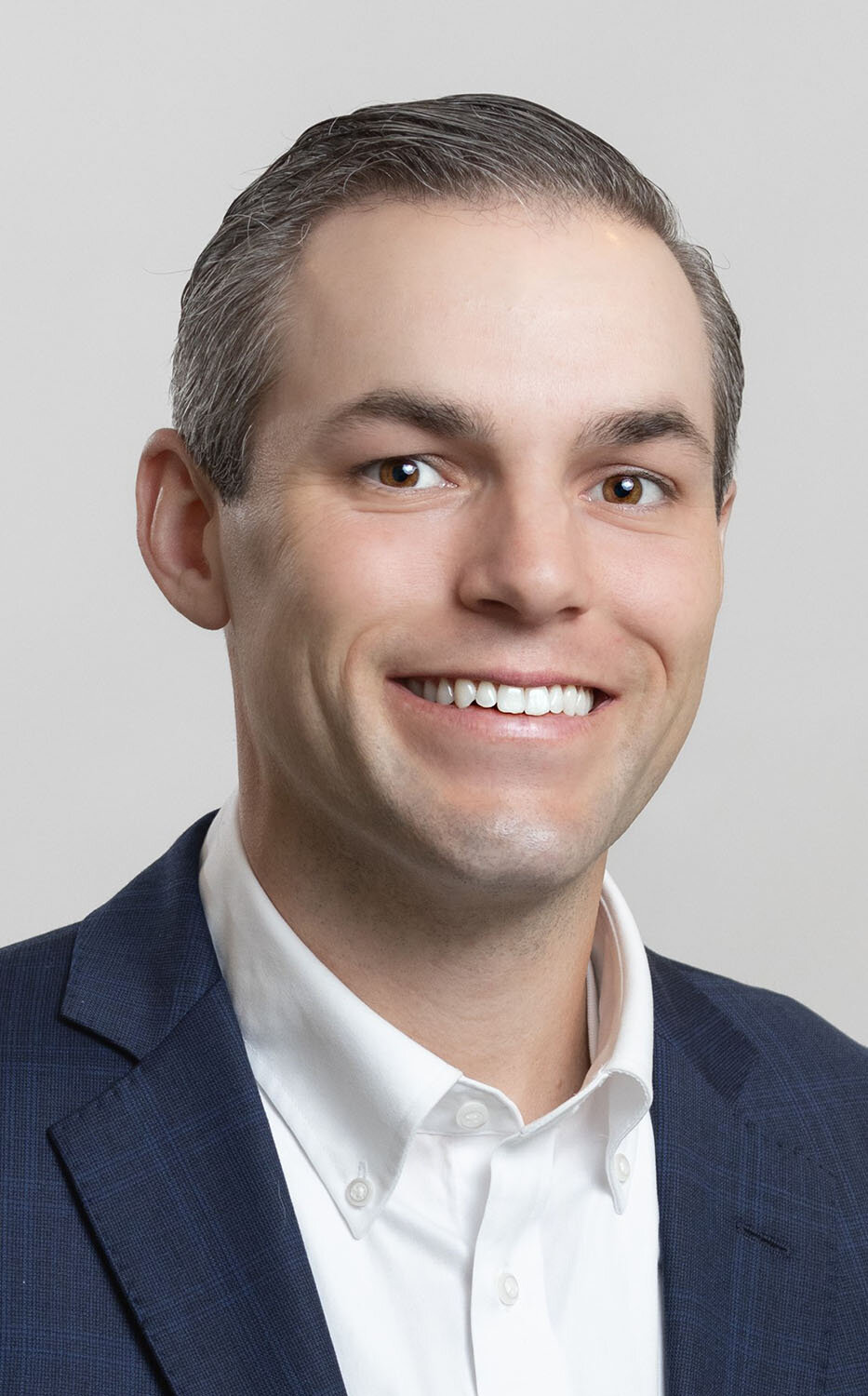
Reid Schwartz is a columnist for The Item and co-founder of Creech Schwartz Wealth Management in Sumter, where he works as a financial advisor helping individuals, families, businesses, and nonprofits plan for long-term financial success.
*Tax and accountancy services are not available through or provided by Creech Schwartz Wealth Management or &Partners LLC.
This article is for educational purposes only and not to be interpreted as tax or legal advice. Any tax planning strategies discussed by Creech Schwartz Wealth Management will be in conjunction with your tax/legal professional.
Securities and investment advisory services offered through &Partners LLC, a broker-dealer and investment adviser registered with the U.S. Securities and Exchange Commission and member FINRA, SIPC.