
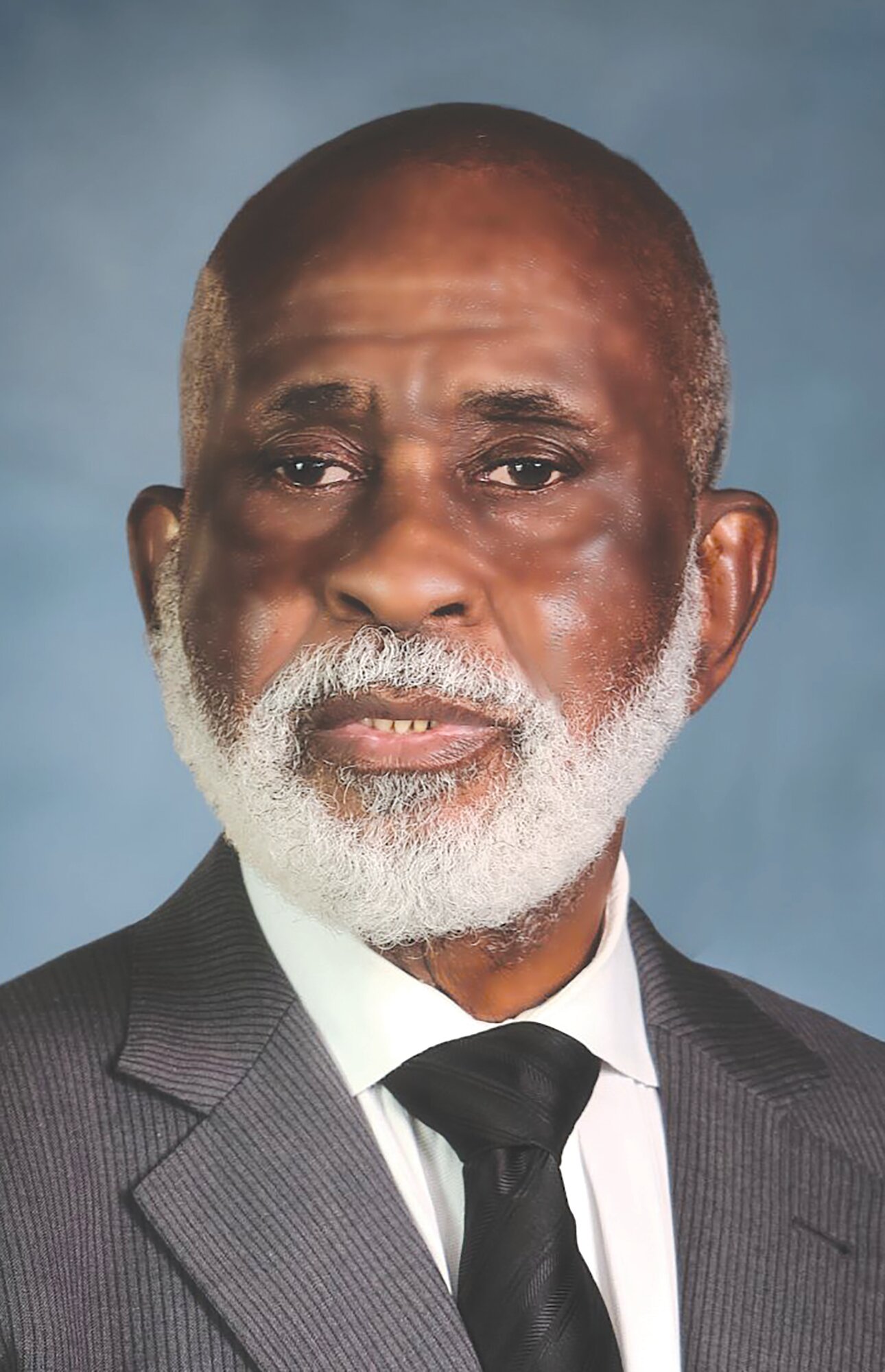
Guest column by Sumter school board Trustee the Rev. Ralph Canty: Signs of unity for school board now can lead to sustained district progress
On Tuesday, Nov. 3, while voters across America were making consequential decisions about their political leadership, something equally consequential was taking place here in Sumter County. Our community was making decisions that could profoundly influence the future of public education for generations to come.
The significance of this election may be far greater than what initially meets the eye.
During the 15-year history of Sumter School District since consolidation, we have experienced a troubling pattern of instability. Boards have selected superintendents, only to experience significant turnover in subsequent elections. Superintendents have come and gone, and the district has too often found itself adjusting to changes in leadership rather than building upon sustained progress.
The relationship between leadership turnover and district-wide instability deserves our serious attention. No organization, especially one charged with educating thousands of children, can achieve its highest potential when its vision, direction and leadership are repeatedly interrupted.
Continuity does not guarantee excellence, but persistent instability can make excellence difficult to achieve.
The recent election offers an opportunity to break that cycle.
I am not speaking on behalf of the incumbents, new Area 5 Trustee Jason Johnson or the other members previously elected. I speak only for myself. Nevertheless, I wish to express my profound appreciation to the citizens who participated in this election and demonstrated their concern for the future of our schools.
The public has made clear its desire for capable leadership, accountability and educational progress. Our responsibility is to honor your expectation through performance, not promises.
Our community called for a new direction in district leadership. With the selection of new Superintendent Dr. Gerald Gary, the board took an important step toward establishing that direction. Now comes the more demanding assignment: creating the conditions in which our superintendent, his leadership team, our dedicated teachers and our extraordinary support personnel can transform vision into measurable achievement.
We have an opportunity to develop a premier school district, distinguished not simply by a few outstanding schools, but by high-performing schools at every level and in every community throughout Sumter County.
During the last several months, the board has demonstrated an increasing capacity to reconcile differences and reach decisions through broader agreement. More decisions have reflected 6-to-3 votes rather than narrow 5-to-4 divisions.
This does not suggest the absence of disagreement. Nor should it. Thoughtful debate is essential to responsible governance. But there is an important distinction between disagreement that strengthens decision-making and division that paralyzes progress.
One seat remains to be decided upon. Citizens in Sumter school board Area 8 are encouraged to participate in the runoff on Tuesday, Nov. 17, and send to occupy that seat the person who has consistently worked to bring harmony to the board and progress to the district.
We must replace the politics of polarization with a spirit of pluralism and diversity; controversy and conflict with collaboration and cooperation; and personal agenda with a shared commitment to the common good.
Our children cannot afford the luxury of our endless division and disagreements.
I recently remarked to a friend that we have been too far behind for too long. Consequently, we must now double, perhaps even triple, our efforts to move forward. And, a board working in solidarity and unity can push the needle in the direction you expect and intend.
Incremental improvement alone will not be sufficient if our ambition is to become a premier school district. We must be willing to think boldly, plan strategically, invest wisely and act courageously.
One of our most consequential challenges involves the physical infrastructure of our district.
Many of our school buildings are aging, underutilized and increasingly inadequate for the demands of contemporary education. Some were constructed for a different generation, a different population and a vastly different educational environment.
We must carefully evaluate enrollment patterns, building conditions, instructional requirements, transportation systems, staffing needs and long-term operating costs.
The possibility of consolidating some facilities while constructing modern schools in strategic locations deserves serious and objective consideration.
But let us be absolutely clear: Consolidating schools is not the same as consolidating opportunity.
Our obligation is not simply to reduce the number of buildings. It is to increase the quality, accessibility and effectiveness of educational opportunities available to every student.
Likewise, constructing new schools must never be confused with just erecting new buildings. A 21st-century school should be a dynamic environment for discovery, technological proficiency, critical thinking, creativity, collaboration and preparation for a rapidly changing world.
We cannot adequately prepare tomorrow's students for tomorrow's opportunities by remaining permanently confined to yesterday's educational structures.
History is important. Our heritage deserves preservation, appreciation and celebration. But our responsibility to history must never outweigh our responsibility to children.
Buildings are important, but bodies are more important. And the future of our children is definitely more significant than our attachment to structures that have outlived their usefulness.
Declining enrollment cannot be reversed simply by moving students from one building to another. Such actions may redistribute the student population, but they do not create additional students.
A sustained reversal will require meaningful demographic changes, including increased births, the arrival of families with school-age children and a community sufficiently attractive to encourage young families to remain, relocate, work and build their futures here.
In this regard, the quality of our schools is not simply an educational issue. It is an economic development issue, a workforce development issue and a community survival issue.
Families consider the quality of public education when deciding where to live. Employers consider the strength of the educational system when deciding where to invest. And communities that fail to educate their young people eventually pay an extraordinary price in lost opportunity, diminished productivity and unrealized human potential.
We cannot afford NOT to invest in public education. The cost of educational neglect will always exceed the cost of responsible educational investment.
Our goal must extend far beyond buildings, budgets and boundaries.
We need a standards-based, data-informed instructional strategy that produces measurable improvement in literacy, mathematics, science, technology and the broader competencies essential for success in the modern world.
We need to recruit, develop, support and retain outstanding educators. We need to strengthen our transportation systems, improve operational efficiency and ensure that public resources are directed toward the greatest possible educational return.
We need safe, inspiring, technologically equipped learning environments that challenge students to achieve beyond what they may presently imagine possible.
Above all, we need an unwavering commitment to equity and excellence.
Whether a child lives in a rural community, a suburban neighborhood or the urban center of Sumter, that child's educational opportunities should not be determined by geography, family income or circumstances of birth.
Every child deserves access to excellent teaching, rigorous instruction, appropriate resources and a genuine pathway to success.
And every school must become a place where excellence is expected, supported, measured and celebrated.
Our district stands at a pivotal moment.
We have an opportunity to bring stability to governance, continuity to leadership, greater coherence to educational planning and renewed public confidence to the work of our schools.
But none of these objectives will be accomplished by trustees and administrators alone.
We need parents who are engaged, teachers who are empowered, students who are inspired, businesses that are invested and citizens who understand that public education is a shared community responsibility.
We must also recognize that the world is changing before our eyes. An aging workforce will increasingly depend upon a younger generation equipped with the knowledge, skills, adaptability and character to assume positions of responsibility in every sector of society.
That generation is sitting in our classrooms today.
What we do now will help determine whether those young people become spectators of tomorrow's opportunities or architects of tomorrow's achievements.
The temptation to retreat into the perceived comforts of pre-consolidation arrangements may appeal to nostalgia, but nostalgia is not an educational strategy. The question before us is not how to recreate yesterday. It is how to construct an educational future worthy of our children.
The decisions ahead will not always be easy. Some will require sacrifice. Others will challenge long-held assumptions and familiar traditions.
But leadership is not merely the art of preserving what is comfortable. It is the courage to pursue what is necessary.
I believe Sumter County possesses the intellectual capacity, human resources, leadership potential and community spirit to create one of South Carolina's premier public school districts.
The question is whether we possess the collective will to make it happen.
We have been too far behind for too long to settle for anything less than excellence.
Let us put our children above our controversies, our common purpose above our differences and our future above our fears.
For we must look for our future in tomorrow, because we will never find it in yesterday.
And for Sumter School District, I believe the best is yet to come.
Incumbent the Rev. Ralph Canty won the Sumter school board Area 3 race on Nov. 3 with 52.1% of the vote.