
Pearl(s) of wisdom
The topiary artist who brought Bishopville to international consciousness knows a thing or two about more than “cutting bushes."
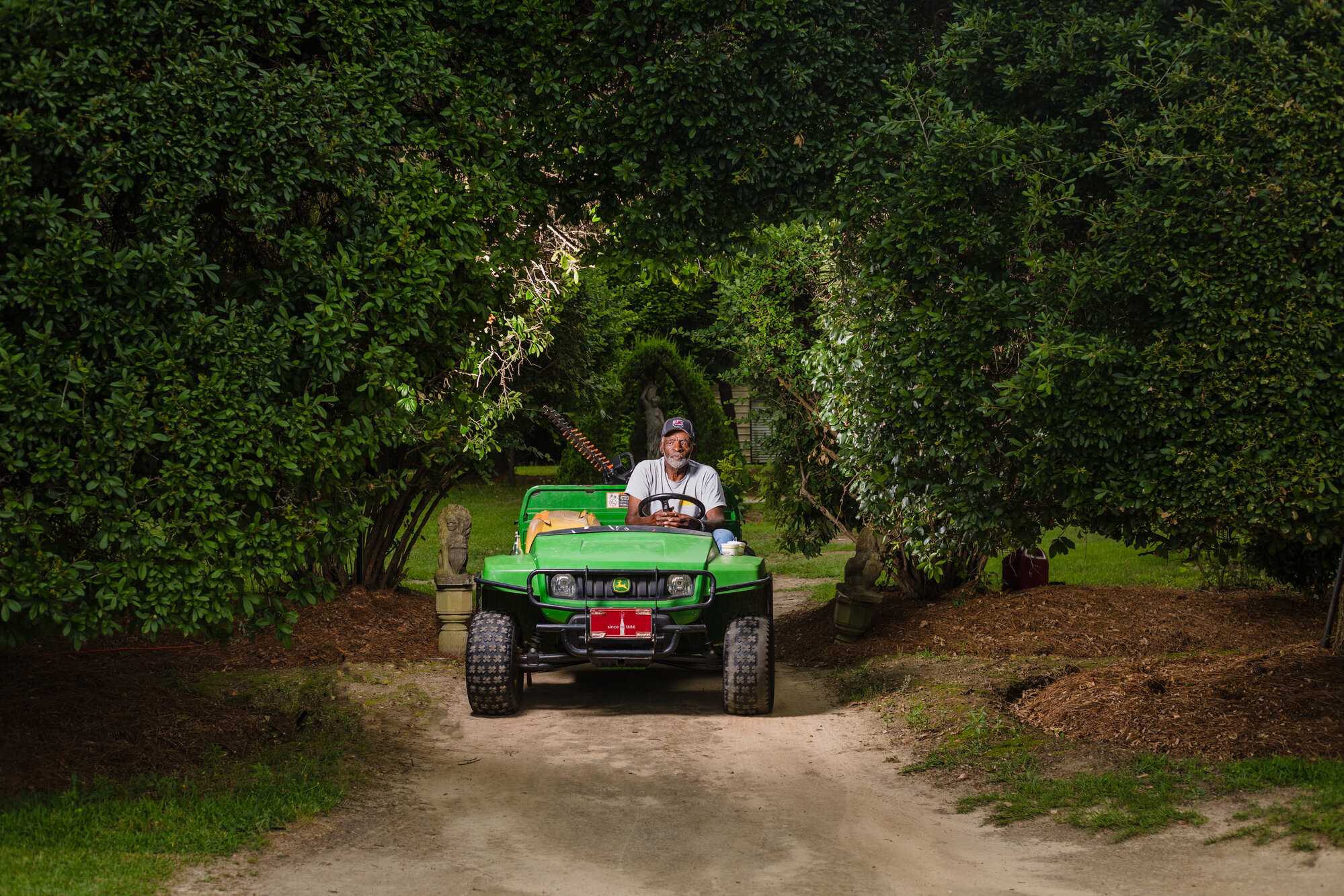
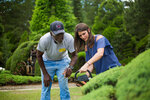
Pearl Fryar works in his garden in Bishopville, SC in 2018.
MICAH GREEN / SUMTER ITEM FILE PHOTO
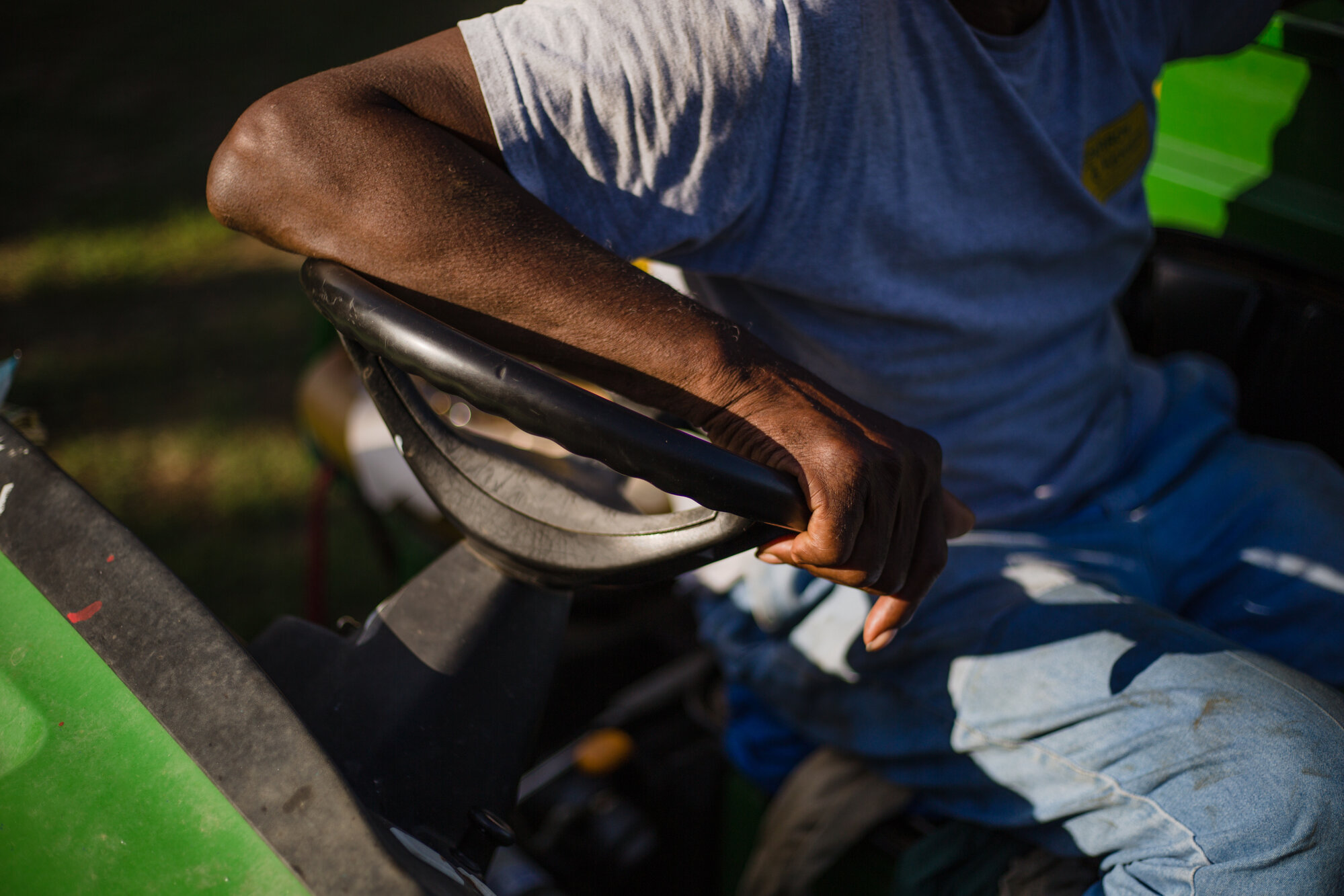
Pearl Fryar works in his garden in Bishopville, SC in 2018.
MICAH GREEN / SUMTER ITEM FILE PHOTO
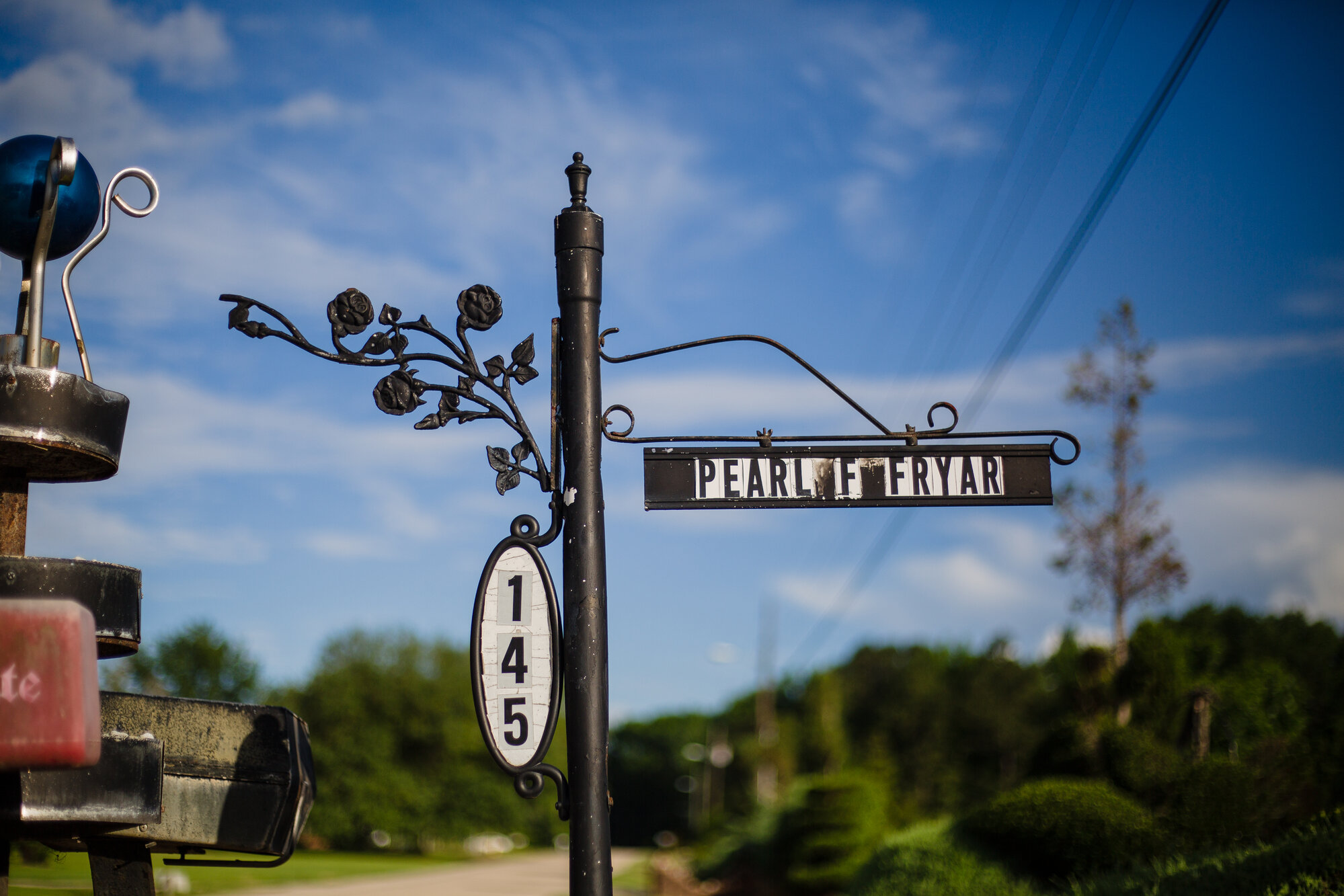
Pearl Fryar works in his garden in Bishopville, SC in 2018.
MICAH GREEN / SUMTER ITEM FILE PHOTO
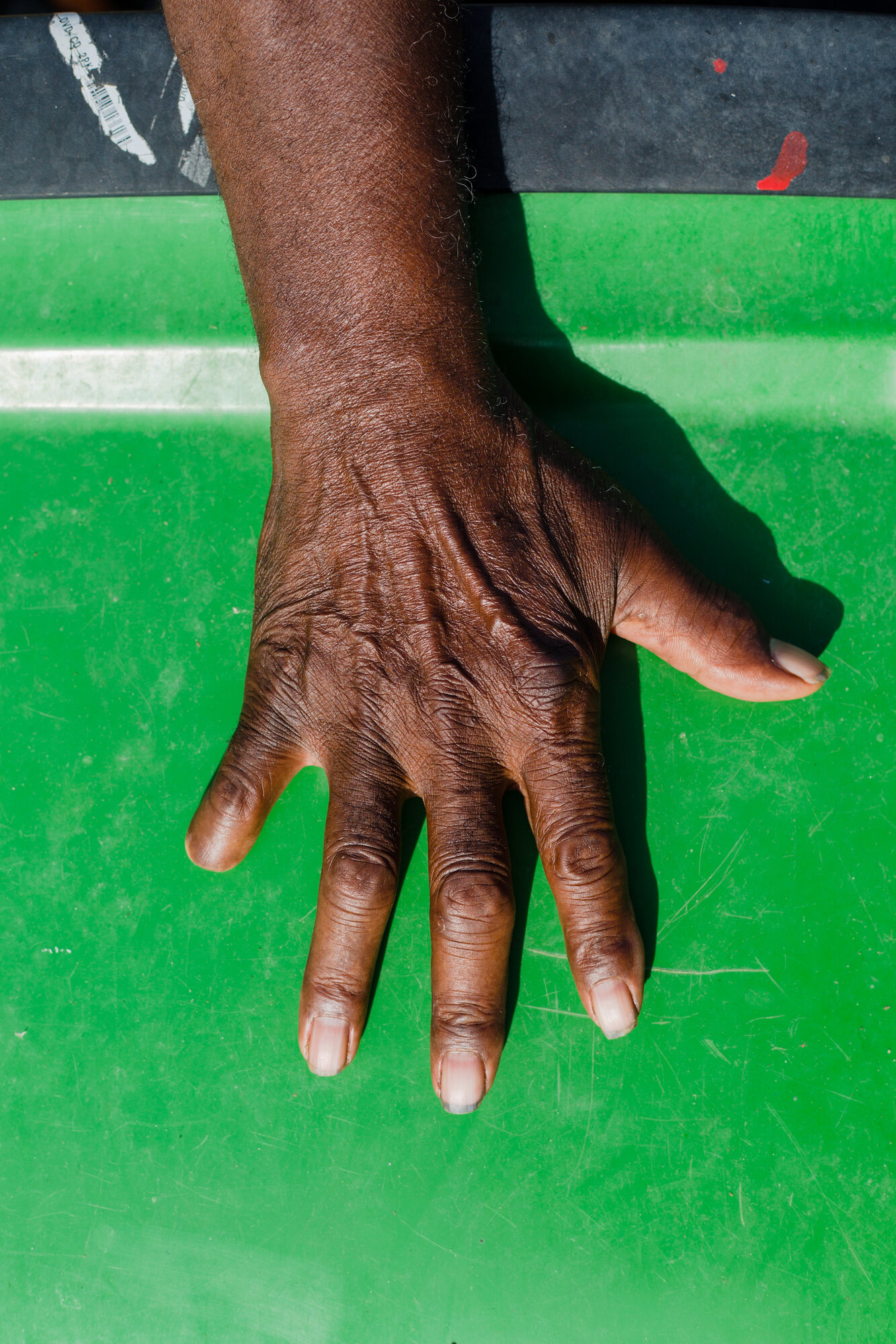
Pearl Fryar works in his garden in Bishopville, SC in 2018.
MICAH GREEN / SUMTER ITEM FILE PHOTO
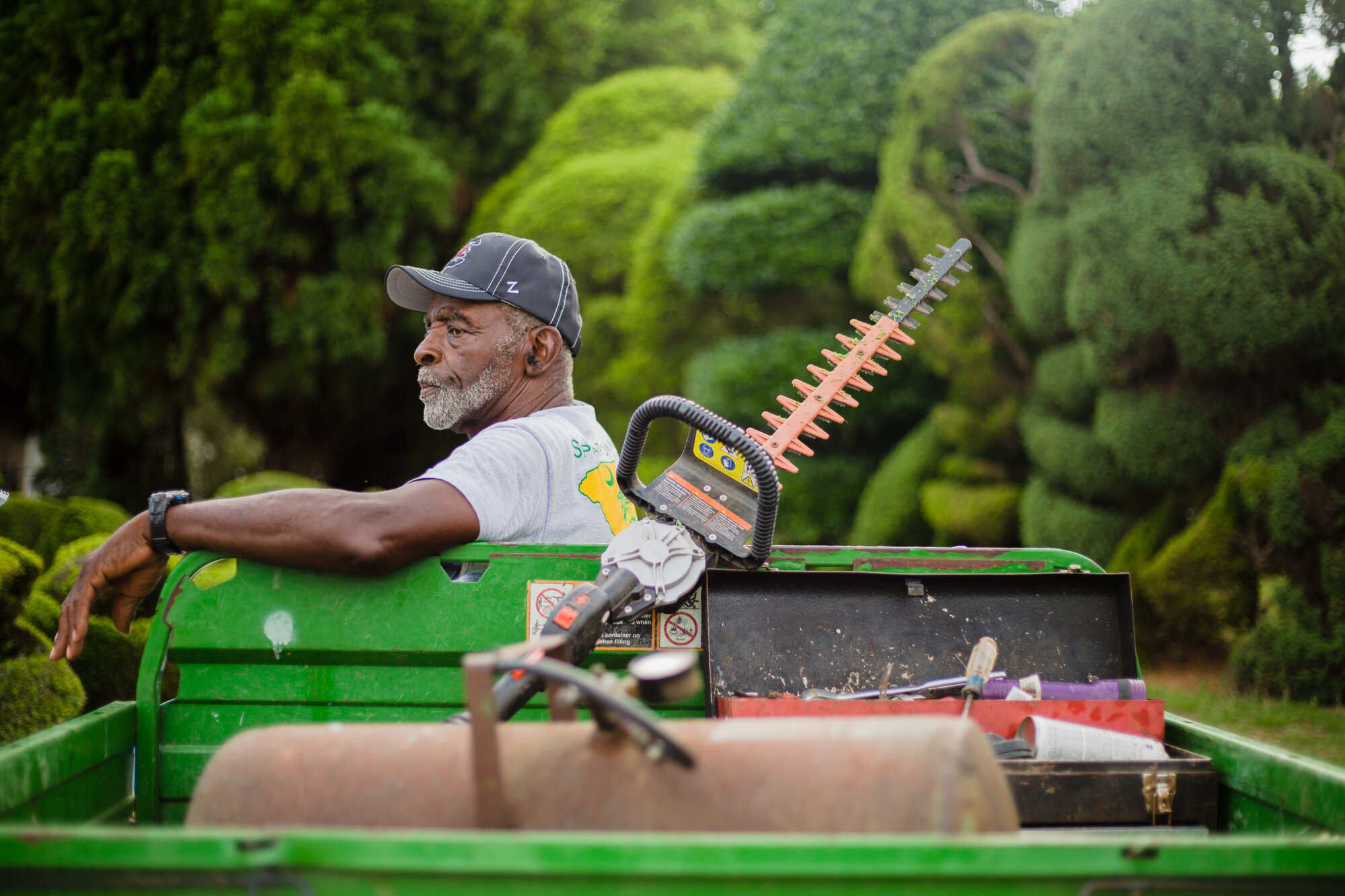
Pearl Fryar works in his garden in Bishopville, SC in 2018.
MICAH GREEN / SUMTER ITEM FILE PHOTO
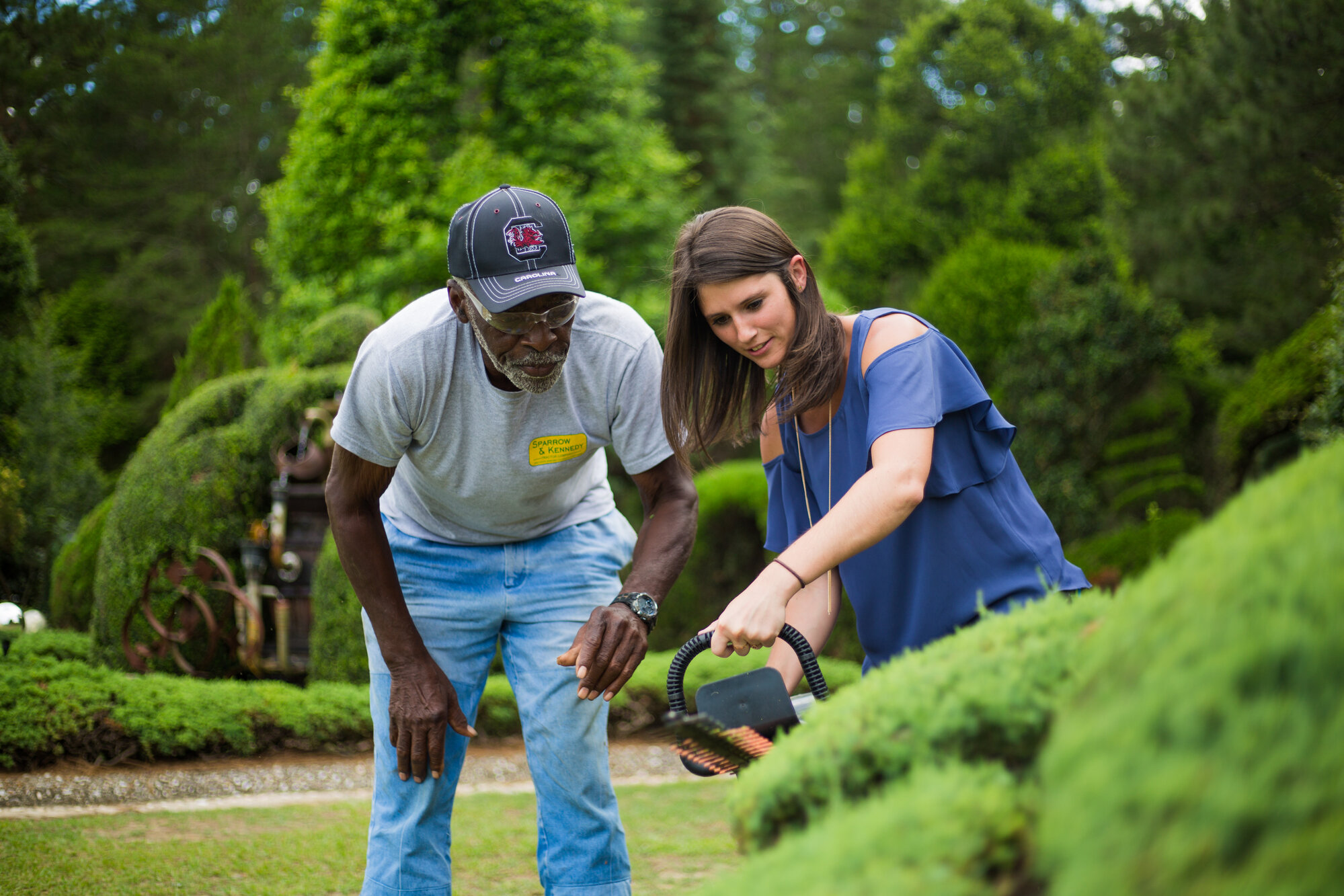
Pearl Fryar works in his garden in Bishopville, SC in 2018.
MICAH GREEN / SUMTER ITEM FILE PHOTO
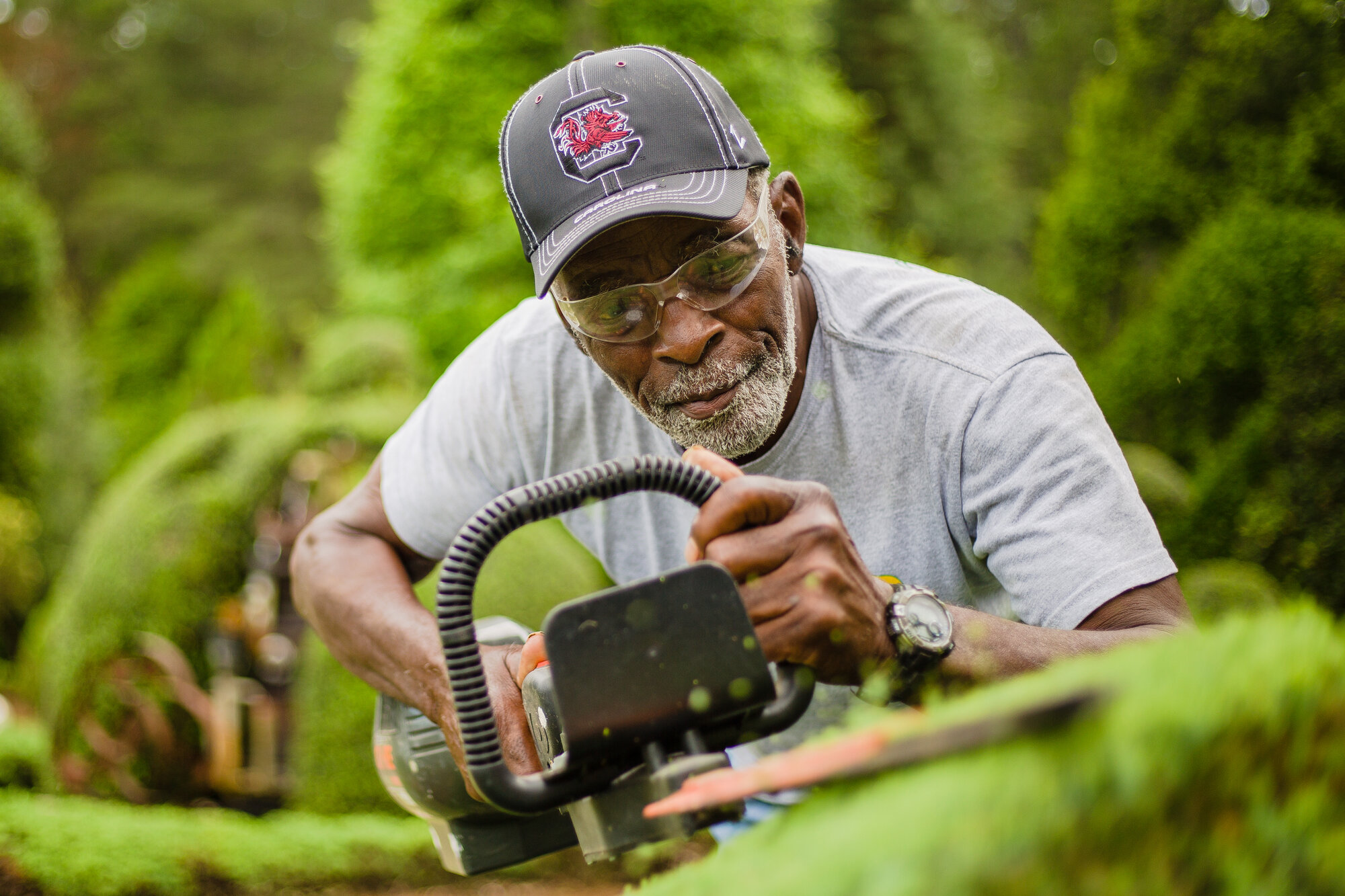
Pearl Fryar works in his garden in Bishopville, SC in 2018.
MICAH GREEN / SUMTER ITEM FILE PHOTO
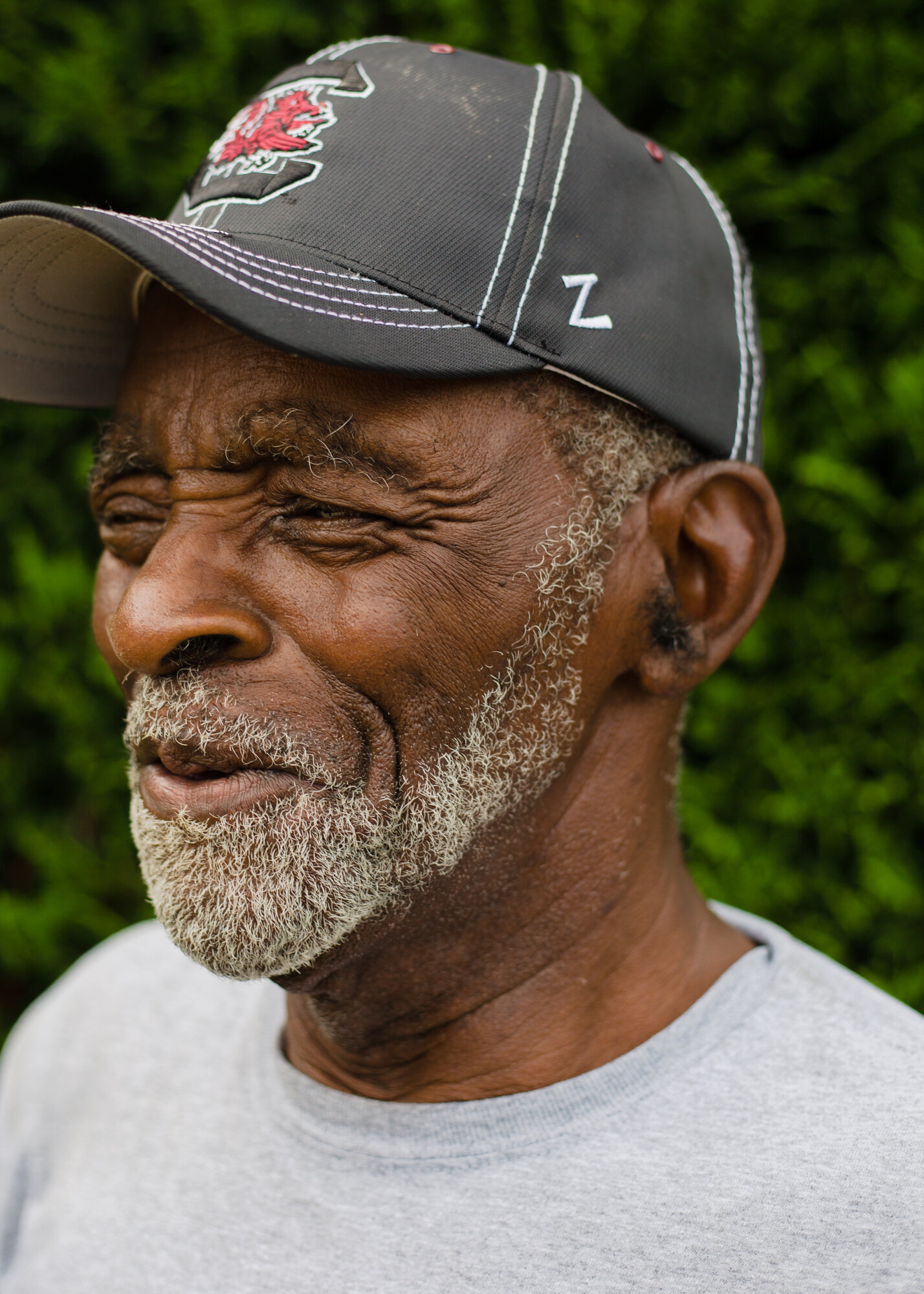
Pearl Fryar works in his garden in Bishopville, SC in 2018.
MICAH GREEN / SUMTER ITEM FILE PHOTO
Pearl Fryar works in his garden in Bishopville, SC in 2018.
MICAH GREEN / SUMTER ITEM FILE PHOTO
Pearl Fryar works in his garden in Bishopville, SC in 2018.
MICAH GREEN / SUMTER ITEM FILE PHOTO

Pearl Fryar works in his garden in Bishopville, SC in 2018.
MICAH GREEN / SUMTER ITEM FILE PHOTO

Pearl Fryar works in his garden in Bishopville, SC in 2018.
MICAH GREEN / SUMTER ITEM FILE PHOTO
Pearl Fryar works in his garden in Bishopville, SC in 2018.
MICAH GREEN / SUMTER ITEM FILE PHOTO
Pearl Fryar works in his garden in Bishopville, SC in 2018.
MICAH GREEN / SUMTER ITEM FILE PHOTO
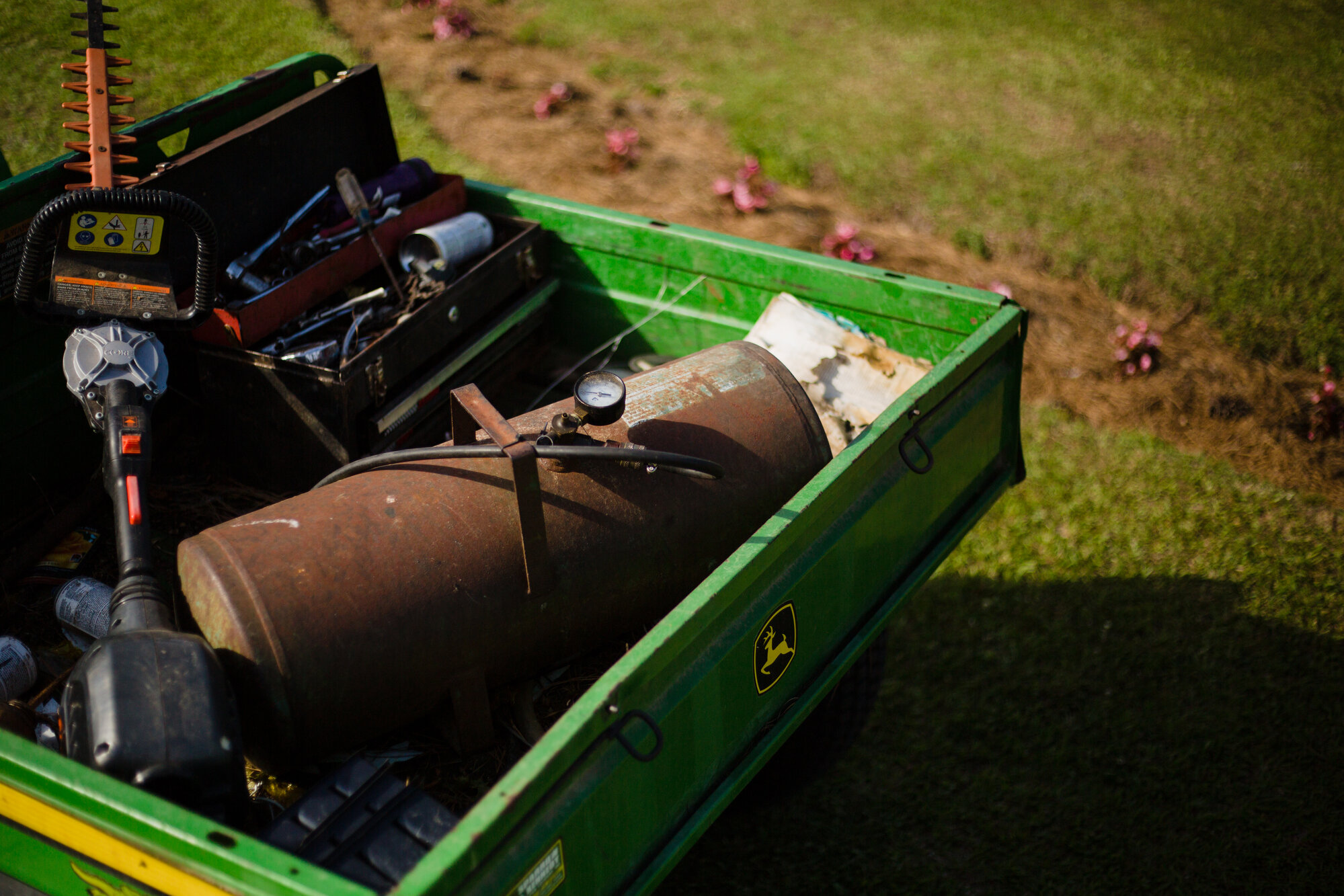
Pearl Fryar works in his garden in Bishopville, SC in 2018.
MICAH GREEN / SUMTER ITEM FILE PHOTO
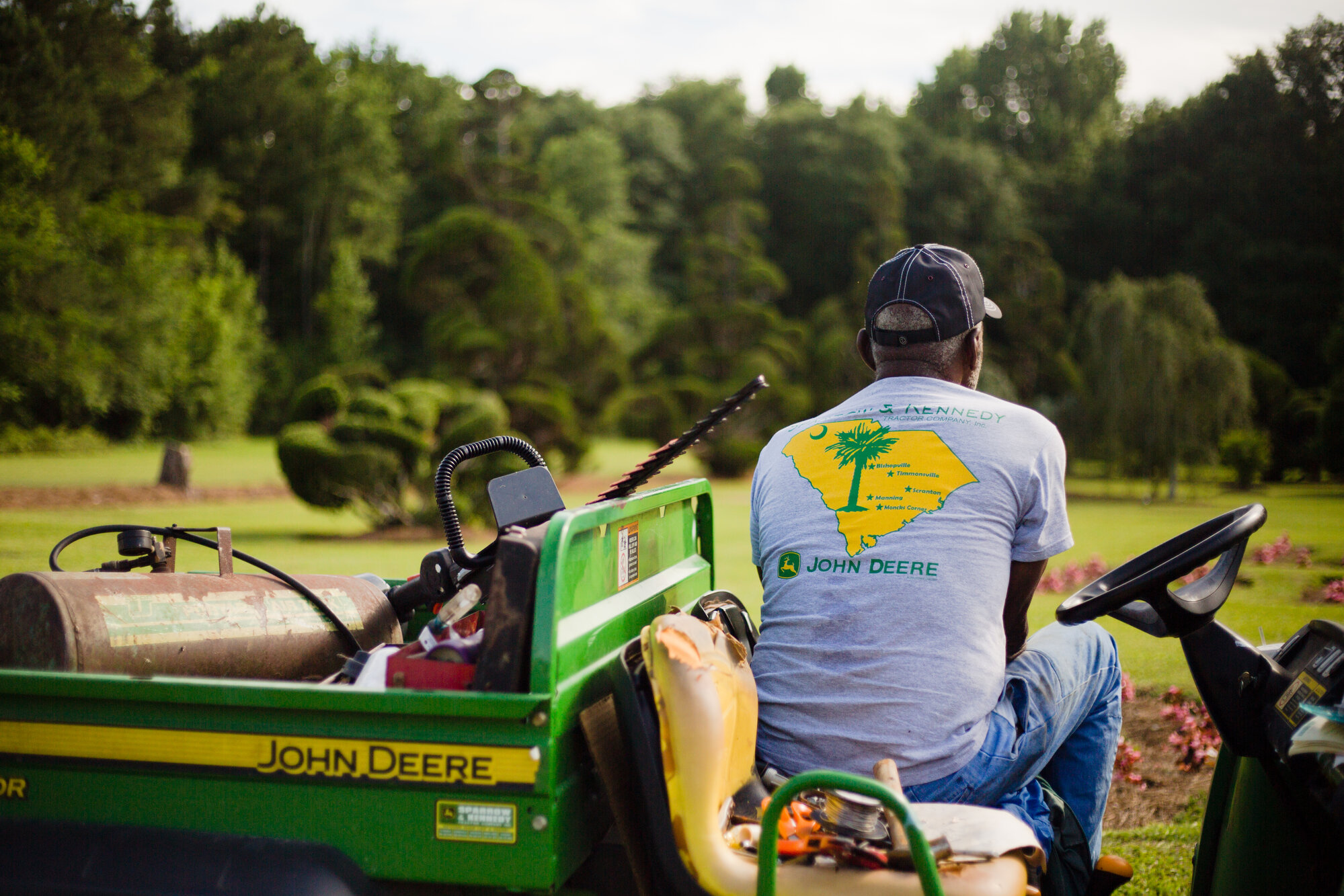
Pearl Fryar works in his garden in Bishopville, SC in 2018.
MICAH GREEN / SUMTER ITEM FILE PHOTO
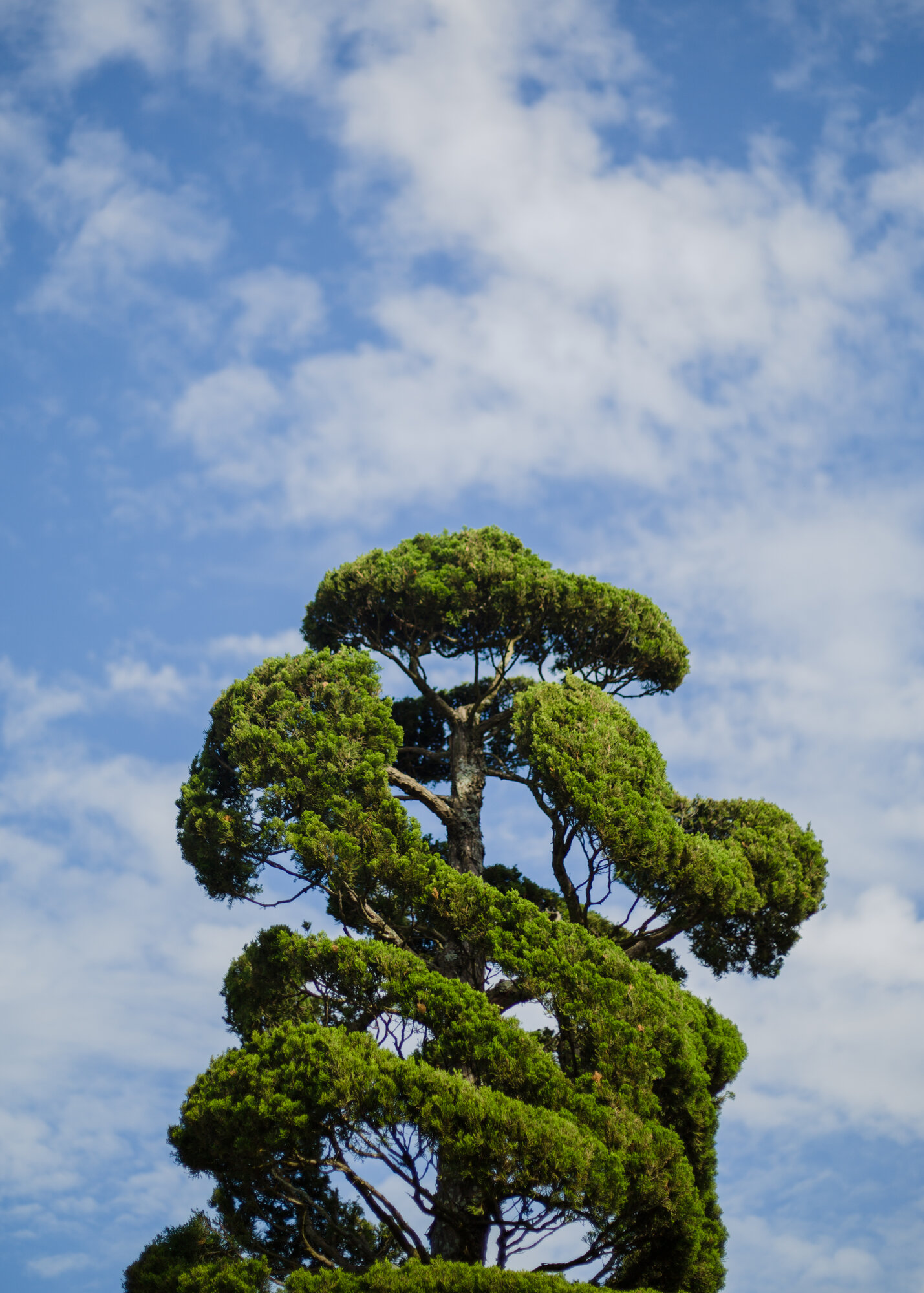
Pearl Fryar works in his garden in Bishopville, SC in 2018.
MICAH GREEN / SUMTER ITEM FILE PHOTO















Posted
Editor's note: This article was originally published in the summer edition of the Lakeside magazine in 2018. It is now available as a look back at Fryar's lifetime of work. He died on April 5, 2026. He was 86.
I felt wary at first of talking too much about Pearl Fryar’s age. I’m not sure I’d like it if our positions were switched, but, then again, I’m the one who has so much to learn. The more I thought about it, and the more advice the famous topiary artist gave – well-packaged and well-delivered in a way only a well-practiced person could articulate – I began to feel (hope) he would acknowledge that was how I had to tell his story.
I had to tell his story that way because there is no denying he is in a different stage of his life than in 2010 when he starred in a John Deere commercial. Or in 2006 when the award-winning documentary “A Man Named Pearl” was released in theaters. He is in a different stage of his life than when he retired after 36 years from a manufacturing job at the local Coca-Cola bottling plant. In a different stage from when that job brought him one state south of his hometown in North Carolina and from living in New York and after serving in the U.S. Army.
There’s no doubt now he has the Yard of the Month. That couldn’t have been said when he bought a corn field in Bishopville in the late '70s and vowed to win the coveted award.
His best-yard reign cannot be credited to his three-minute lesson from a nursery owner in Camden on topiary – the art of cutting trees and shrubs into shapes. It was the first two parts of his three-part motto.
Work. Passion.
“I got in a lot of trouble as a kid because I was always cutting things up and shaping them,” he said.
He went to college and “did it by the books,” but he is quick to say education doesn’t give you talent, and education in itself won’t make you a millionaire. Wanting to be a millionaire often won’t make you a millionaire. It’s having a talent, realizing that talent, working hard at pursuing your passion, and using education to get you a comfortable living to allow for a hobby. At least that’s how he did it.
Then comes the third part.
Marketing.
“I never thought I’d be sitting here talking to you about cutting bushes,” he said. “But I cut bushes like nobody else does.”Education is flawed, in his eyes, because “we’ve lost too many students from the bottom because education is taught from the top down.” He has never been one to sit and let a tree shape itself, so he’s doing something about it now that he’s marketed himself plenty.
In 2006, a group of his friends and supporters created a nonprofit called The Pearl Fryar Topiary Garden Inc., which awards scholarships to Lee County students who attend Central Carolina Technical College. He has groups of students drop in seemingly every day – he is already out there anyway with his hedge trimmer, still, about every day – and he is often invited to universities to inspire young minds to follow their own passions.
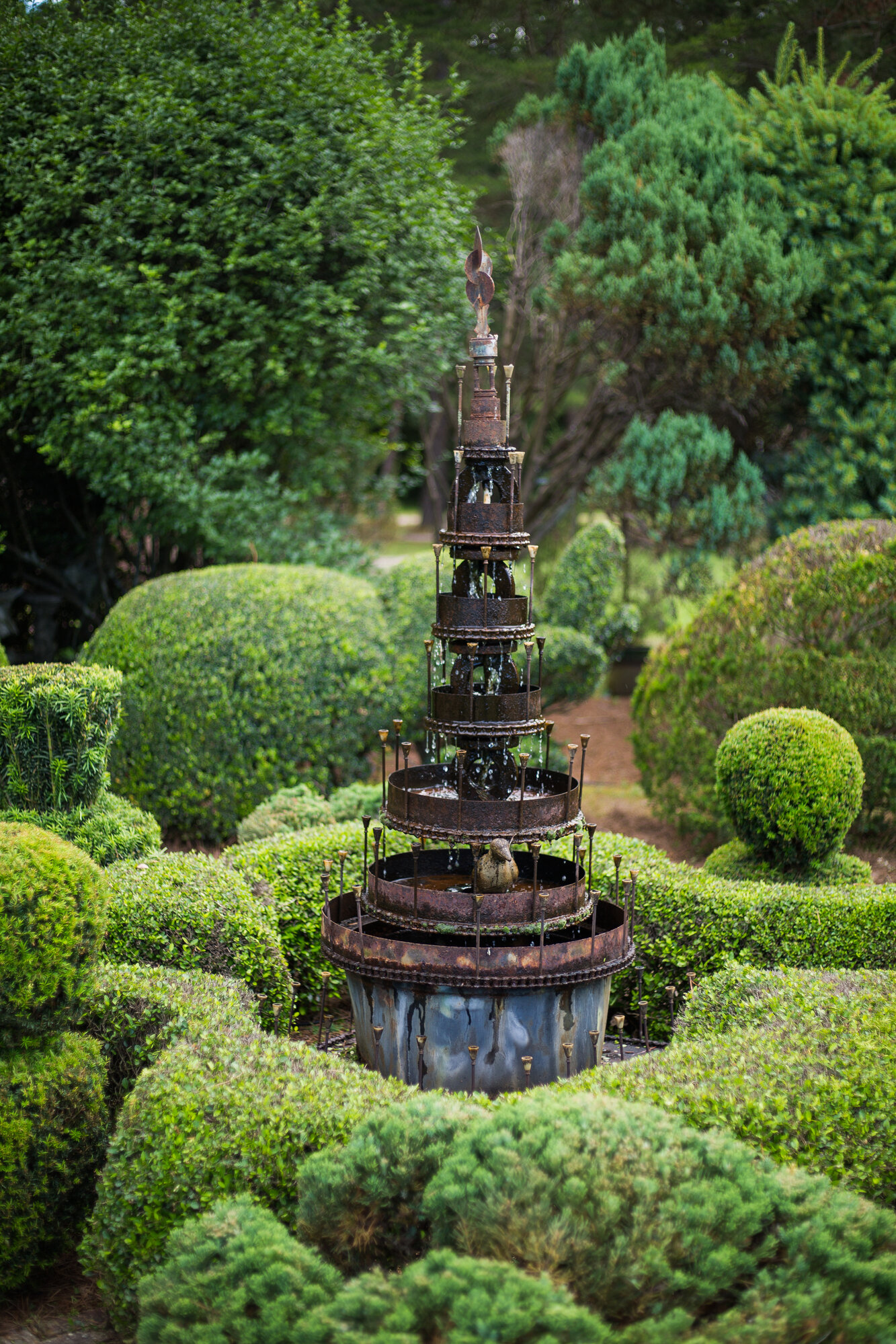
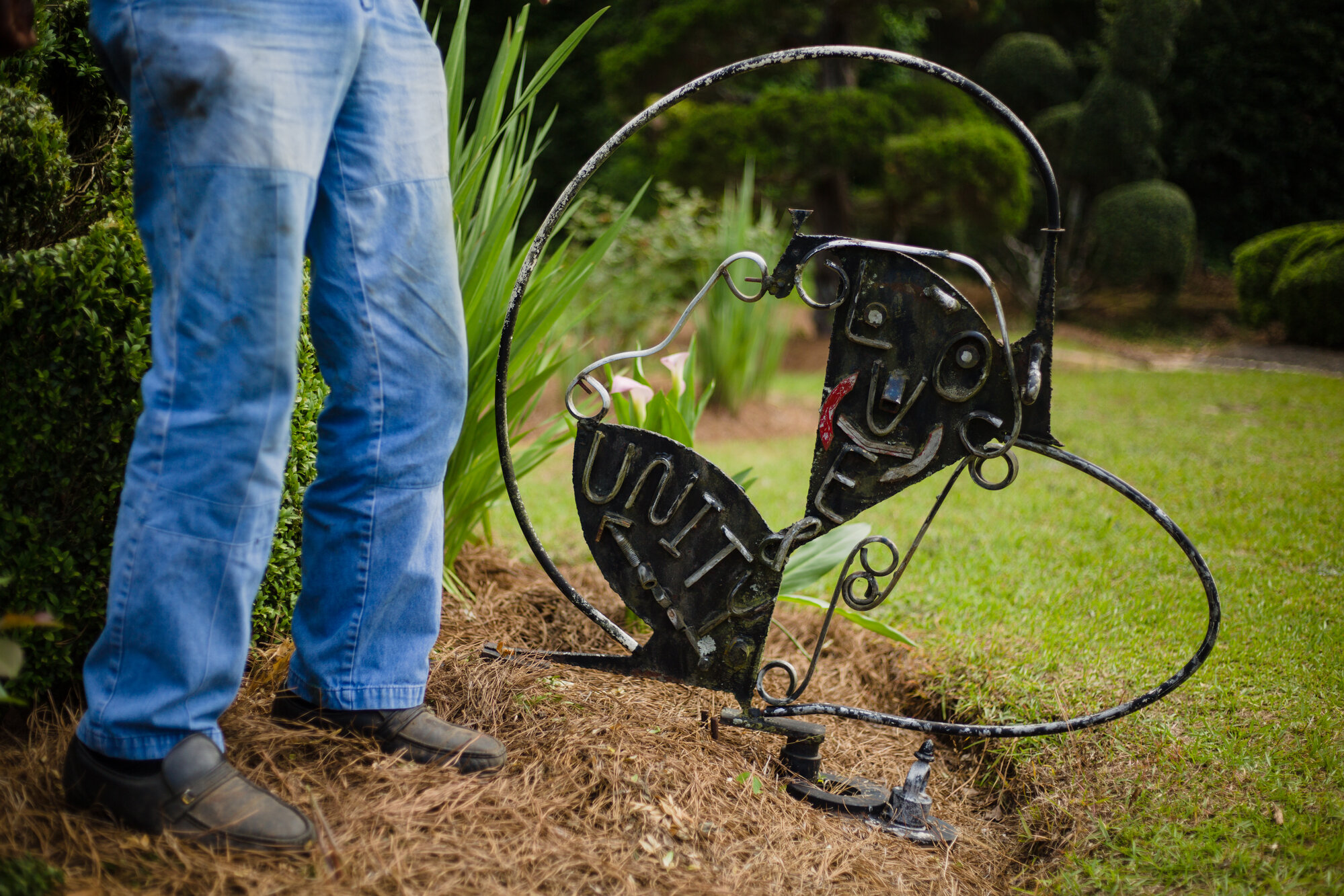
His garden has even transformed into an educational tool, and his message is landscaped – literally – into his topiary and his newer, interchangeable additions of junk turned art.
“Life is about choices. Negativity and hate will bring you down and destroy you,” he said as he explained a metal piece with words of love on one side and words of hate on the other, like his own version of the sock and buskin comedy and tragedy theater masks. “As a whole, nothing comes from negative thinking.”
I don’t know when he learned to think with positivity and love instead of negativity and hate, when he learned it’s about finding passion. Maybe he always knew. I’ll admit I didn’t ask him. I also didn’t ask him what he majored in, but he said no one does. (He told me later. The self-taught tree trimmer who harnesses his innate creative talent majored in math and chemistry.)
“If you work in your passion and you meet 100 people,” he said, “someone’s going to help you.”After learning all that about him, after talking with him for a few hours over a few days – which will never be enough because I could sit out there for a week watching the mesmerizing clipping, pruning, shaping of leaves -- I knew I wanted, needed to write his story from where he is now. Not to introduce people to Pearl Fryar. They already know him all over the world, and, as he says, he's had plenty of marketing. I needed to update his story. To build on what has already been told.
He is building on his career and looking ahead. He knows he won't be able to hold that hedge trimmer forever. That's why he wants to make sure people know about the nonprofit, which takes donations both for the scholarships and to maintain the garden. He wants people to know who has helped him along the way, like Waffle House, which funded a calendar, and Coca-Cola, which built restrooms for visitors, and Moore Farms Botanical Garden and Sparrow and Kennedy and Harry and Harry Too. I wouldn't normally list sponsors like that. It seemed like the thing to do.
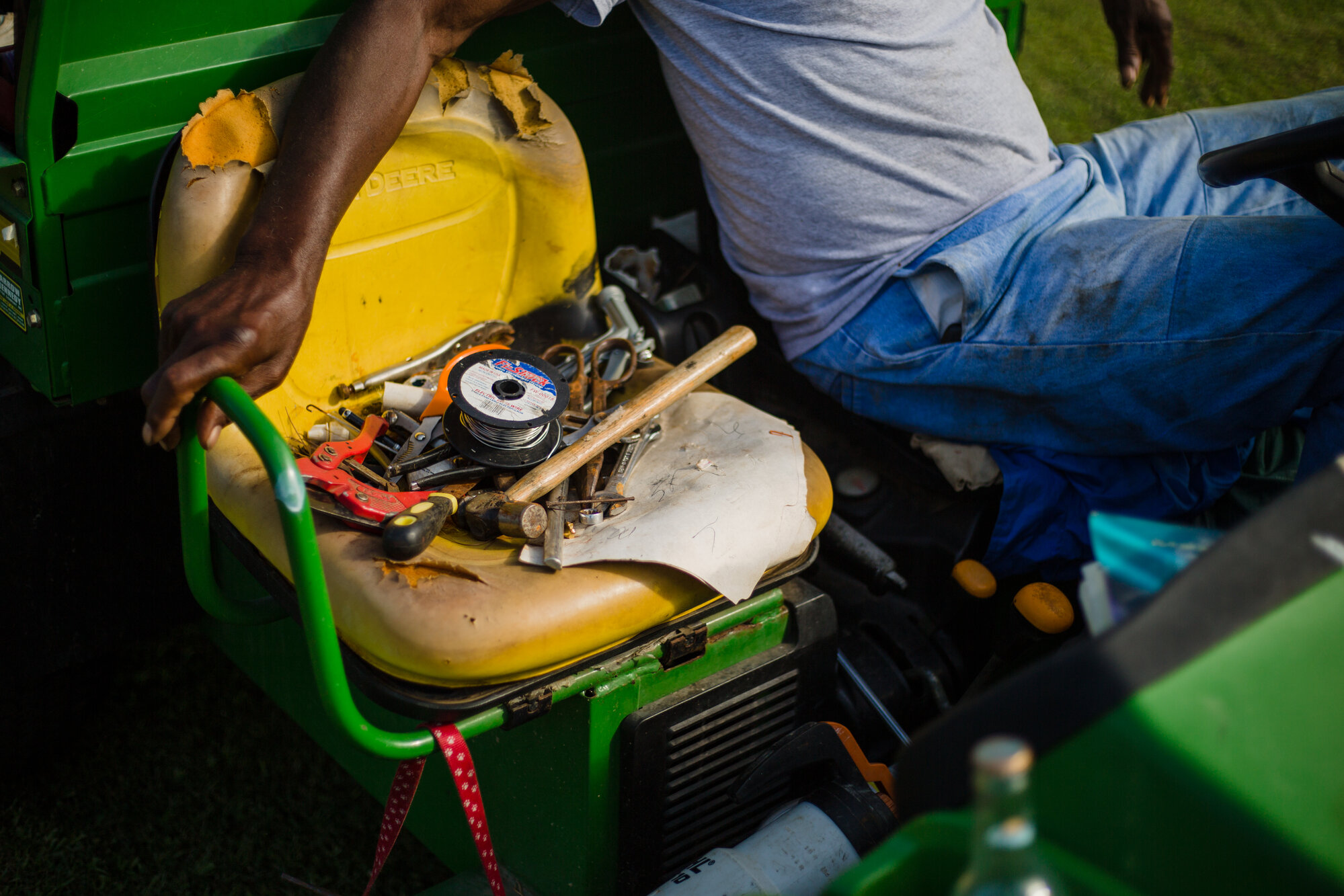
He was younger in the movie and commercial, so I couldn't tell his story from that moment. He had no silver hair. His Gator was less worn. He stood up straighter, and I imagine he could stand up longer.
There’s no denying that, and I feel part of his upfront demeanor and advice to live with love and passion includes living in truth. Under that, at 78, he is still the same – if you actually look at him – in the creases that swallow his eyes after he takes a moment to see if you’re going to laugh first and before his voice breaks into one. In his upper arm muscles, long used to holding equipment at eye level. In his trees and his iconic pinestraw and flowers that spell “Peace, Love & Goodwill.”
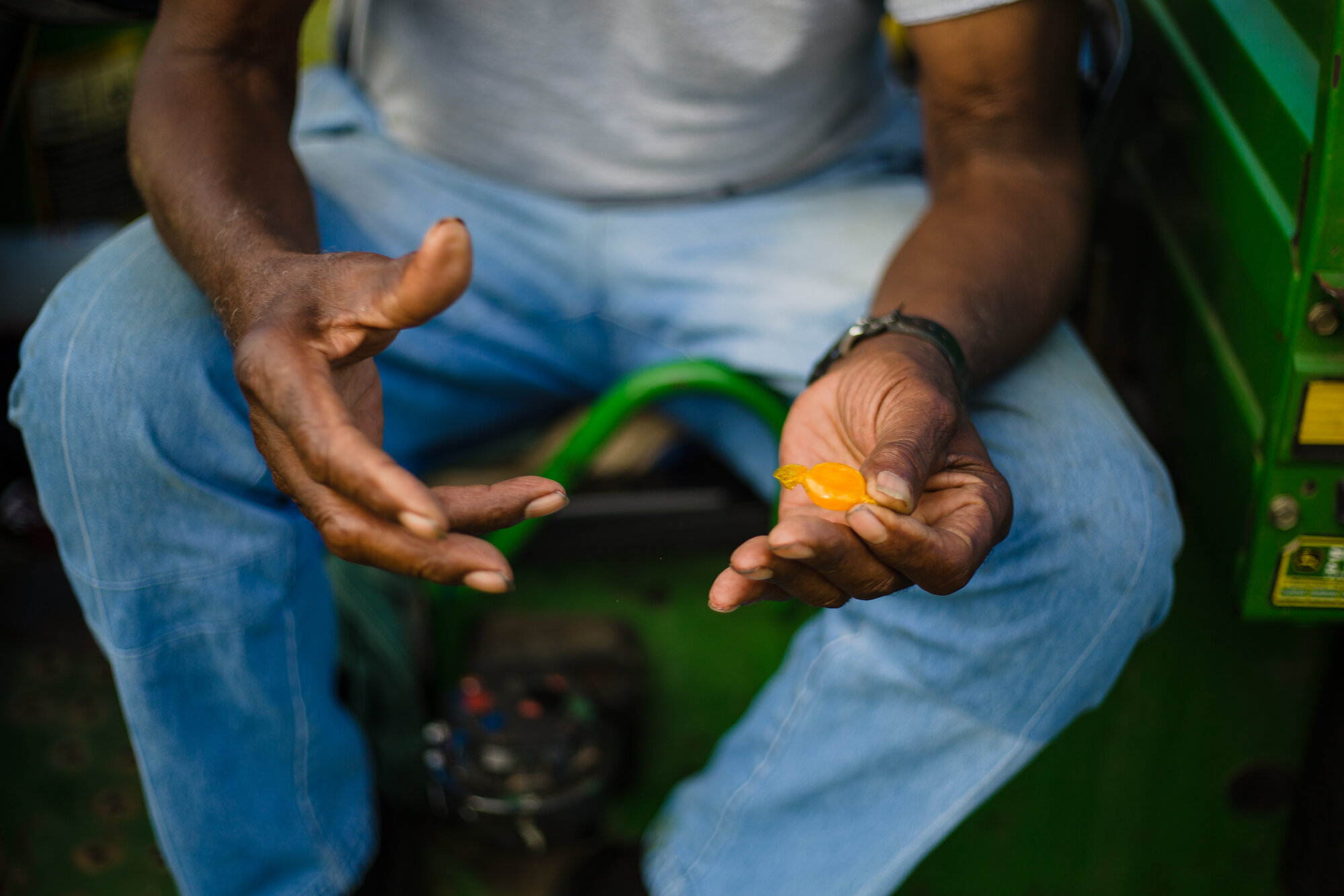
That’s how I had to tell his story. Because, as Pearl also told me, sitting on his Gator in the late afternoon sun after yet another day of “cutting bushes,” you don’t get attention by doing what everyone else is doing.
x