
Lee County Council advances renewal of penny sales tax


At its April 14 meeting, Lee County Council gave second reading approval of an ordinance to place the renewal of the county's Capital Project Sales Tax, commonly known as the penny tax, on the Nov. 4 ballot.
The 1% sales tax was first approved by referendum in 2012 and renewed in 2018. It is set to expire April 30, 2027.
Through the years, the penny tax has funded major improvement projects across Lee County. The money is used to accomplish a list of capital projects developed by the CPST commission.
This commission will define the question and identify the projects to be included on the November ballot.
The tax does not apply to groceries, gas or medication.
"We've gone through this process twice since the penny was originally put in place by referendum in 2012," said County Administrator Alan Watkins. "We're going to put out a lot of information about the 'capital penny' as we go forward, but I don't know of any single thing we have done in this community in the last 15 years that has had a bigger impact than the capital penny - what it's been able to help us do in this community from a public safety standpoint, a recreation standpoint. It's just made the quality of life in our community much better and made this a safer community."
CPST Commission has until June to meet with representatives from City of Bishopville, Lee County and Town of Lynchburg to hear requests and develop a list of capital projects that will be beneficial to the community. The commission has met twice to date: once for an organizational meeting and another on April 30 to hear presentations regarding county public safety needs.
Watkins said that more than 80% of money requested through the penny tax for county projects will continue to be dedicated to improving county public safety departments. Council Chairman Travis Windham emphasized the importance of this tax helping the county to absorb the growing cost of public safety equipment.
"When you start talking about $500,000 or more for a fire truck or $250,000 for an ambulance, it's just mind-boggling," Windham said. "It's my opinion that if we didn't have this penny, it would be unbearable as far as the taxes that would have to be levied. It's been a good thing, and I'm just hoping that the citizens of Lee County will continue to keep this penny in place because it's very, very important."
During committee reports, Councilwoman Johnette Caughman, chair of the county's Public Safety Committee, said the committee has had "lengthy" discussion surrounding various needs in the public safety departments, one specifically being communication equipment. The majority of radios used by Lee fire, EMS and law enforcement agencies will no longer be supported starting next year.
"Meaning you can't get updates to them and if you have a problem with them, you can't get them fixed," Watkins explained.
The cost to replace radios and some body-worn cameras that are compatible with radio is $1.9 million, according to Watkins.
Other high-dollar items include air packs for the fire department, with some being older than 15 years. The cost to replace those totals about $900,000.
"Our hope is that the capital penny will pass and we'll be able to buy these radios with capital penny proceeds," Watkins said. "The sad thing is, if the penny were not to pass, we still have to buy the radios and would have to borrow that money and most likely have to increase property taxes to accomplish that."
According to Watkins, additional CPST Commission meetings are scheduled for May 11 to hear presentations from City of Bishopville and Town of Lynchburg and May 12 to hear additional requests from the county regarding quality-of-life improvements in areas such as recreation. Both meetings will begin at 6 p.m. at the Colclough Building, 109 E. Council St. in Bishopville. Both meetings are open to the public.
In addition, the council will hold several community information meetings on the capital penny.
TOWN OF LYNCHBURG AGING WATER SYSTEM UPDATE
Council also approved a resolution assisting Town of Lynchburg with a federally funded water system improvement project.
Watkins told The Item that the town requested assistance with a specific repair to a well, which had been completed but because of a timing issue with its cash flow, the town was unable to pay the full amount of the invoice.
The total owed to the contractor was $176,520 and the town has paid $58,745 utilizing penny tax money. That leaves a balance of $121,520, according to Watkins.
The federal grant through the Southeast Crescent Regional Commission will cover the full cost of the project. It required all invoices be paid in advance and then provides a reimbursement through the grant. That reimbursement will come back to the county.
"The county is simply assisting with the initial payment and will be reimbursed by Lynchburg once the grant funding is received," Watkins told The Item.
In 2024, The Item spoke with Erin Riggs of The US Water Alliance, a national organization that has spent 16 years working to inspire and sustain "a diverse movement to advance transformative solutions to pressing water challenges so communities," like Lynchburg, "can thrive."
Riggs said the national team partnered with the small town of more than 200 residents to restore its aging water infrastructure.
In 2024, Riggs said Lynchburg had two wells and a water treatment system, which makes up its drinking water infrastructure. On the wastewater side, the town has a lagoon system, meaning wastewater is directed to a "shallow, open-air pond" designed to treat sewage by "slowly filtering and breaking down waste before releasing the treated water." Both the town's water and wastewater systems are outdated and therefore in violation of regulations, meaning most of the current funding coming in must go toward getting the systems into compliance.
The Item reached out to US Water Alliance for an update on the partnership and will publish more information as it becomes available.
When asked, Watkins said he is unsure whether this is part of a larger overall plan for improvements or is a specific repair of the well only.
PUBLIC HEARING TO PURCHASE JENNINGS
& JENNINGS LAW FIRM
Council also held a public hearing regarding the proposed purchase of Jennings & Jennings Law Firm office building, behind the Lee County Courthouse. The county previously approved a contract option for the building in October 2025.
Council gave second reading approval to purchase the property for $205,000.
Watkins said the building could provide needed office and records storage space.
"The courthouse is full, and every office is being used," Watkins explained. "In addition, there is a lot of record retention that the county is responsible for, and having this option for additional storage is another possible use for the building."
COUNCIL AWAITS PENDING APPROVAL OF DISTRICT LAND TRANSFER
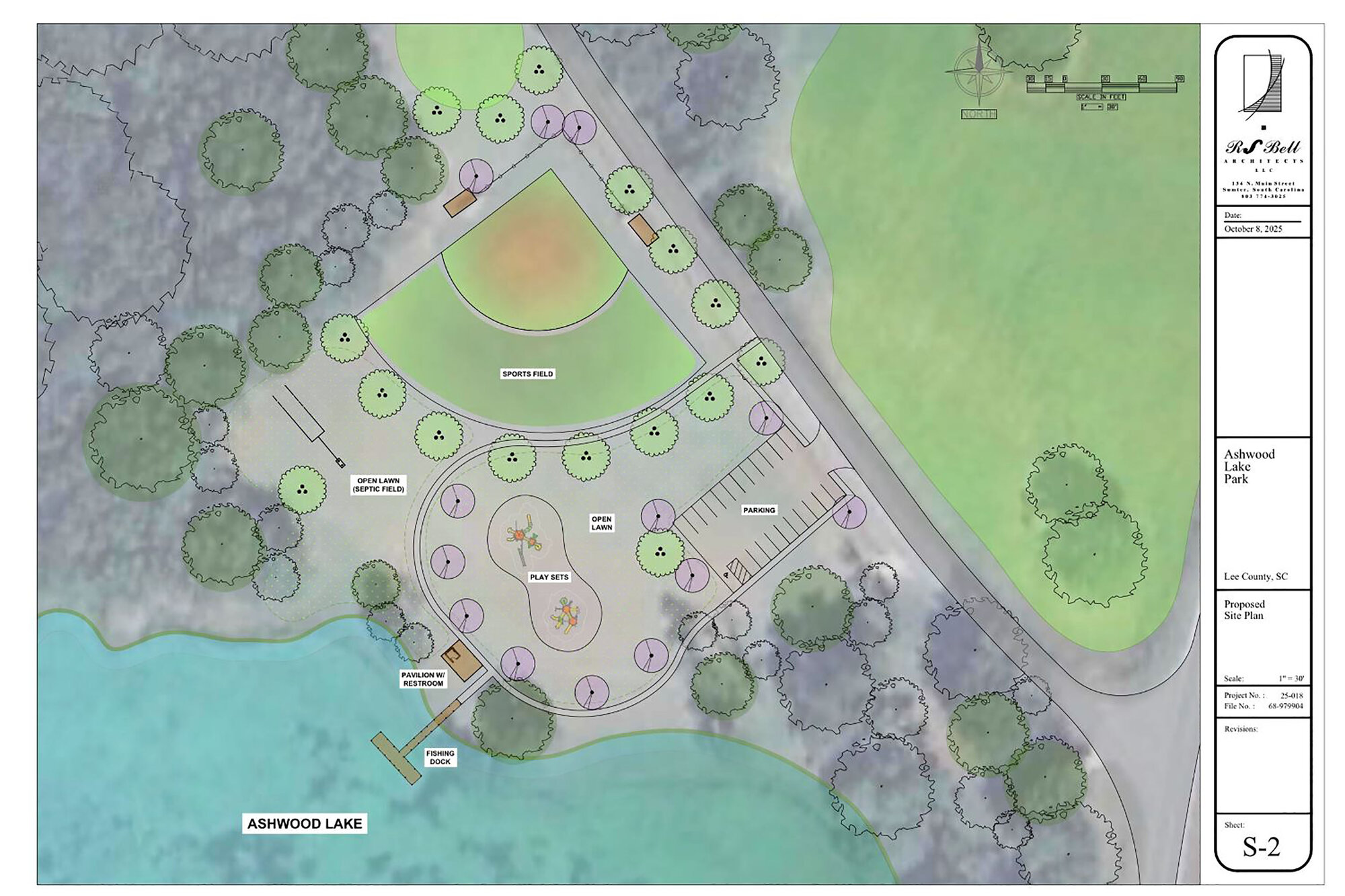
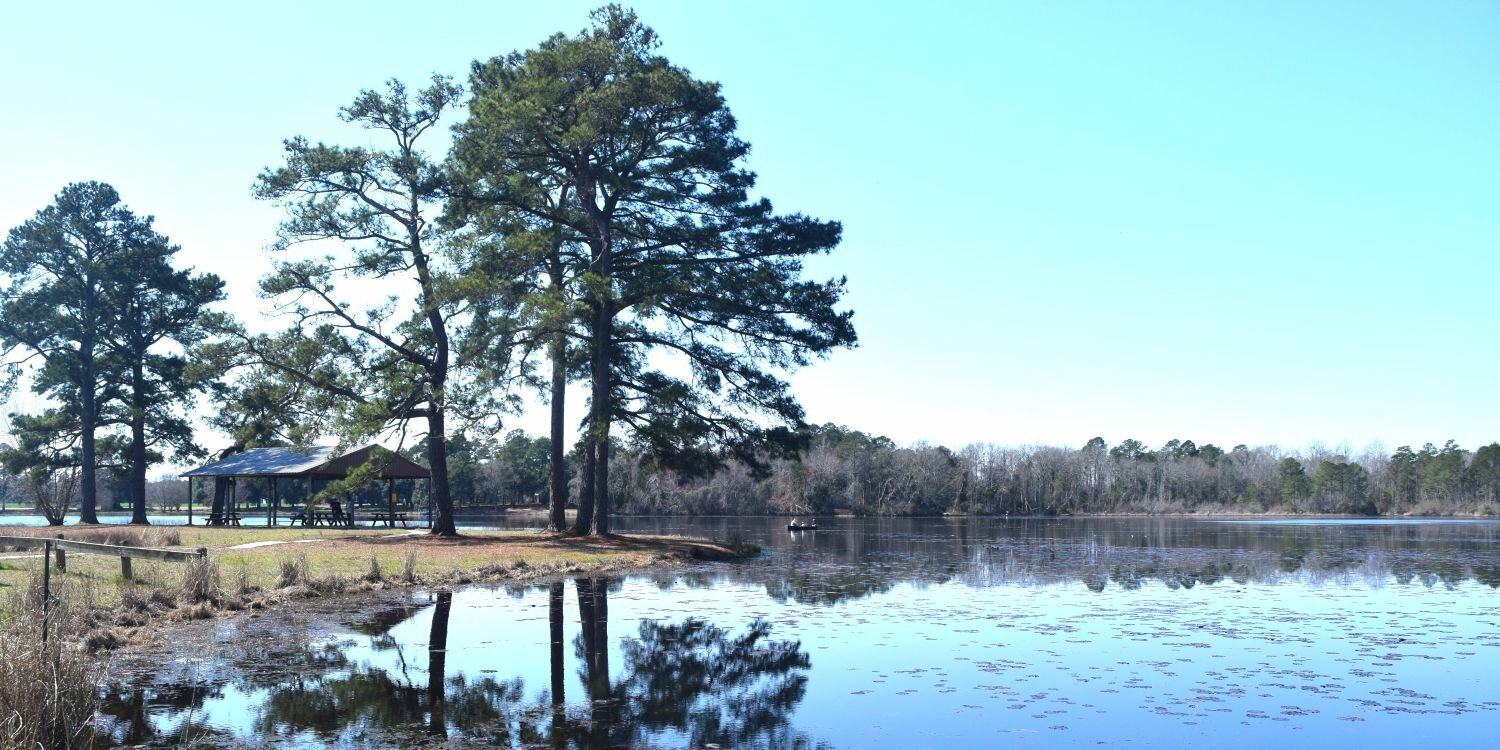
Councilman Keel Addison, part of the county's Recreation Committee, updated council on an ongoing discussion between Lee County and Lee County School District regarding possible recreation improvements to Lake Ashwood.
Council is requesting the school district deed the entire Ashwood Lake site, more than 200 acres, to the county.
The property once housed Ashwood Central High School until it closed in 1980. The only remaining structure from the campus is its school gym.
In a proposed site plan, additions and improvements include building a fishing pier, adding picnic areas and a playground and creating new parking with better access to the water.
Addison pointed to a transfer of this kind that occurred in the past and led to improvements that were beneficial to Lee residents.
Watkins told The Item that the county had been using the athletic facilities of the old Bishopville High School for more than a decade before the property transfer. The county requested the transfer in order to facilitate the demolition of the main two-story building on the property, which was constructed in the 1930s. The building had fallen into disrepair since it closed in the 2000s, becoming both "an eyesore as well as a safety hazard," Watkins said.
The property was transferred in July 2015, and the demolition was completed in 2016. Additional parking was also added to the site to accommodate the county's recreational use. Still standing are the football field with its bleachers and lights, a baseball field with lights and a gym. Addison said the county invested more than $600,000 in the property since the 2015 transfer.
The facilities are used "extensively" by the county's Recreation Department for youth and adult activities as well as by the general public, Watkins said. The school district still uses the rear classroom area, constructed in the 1980s, for its Adult Education program, per the terms of the deed transfer.
The county is awaiting word from Lee County School Board regarding its request.
"I believe that with this partnership, Lee County citizens would have another safe and beautiful place they could be proud of," he said. "I encourage everyone who would like to see this project happen to reach out to your school board member and let them know."