
Drought continues to impact South Carolina
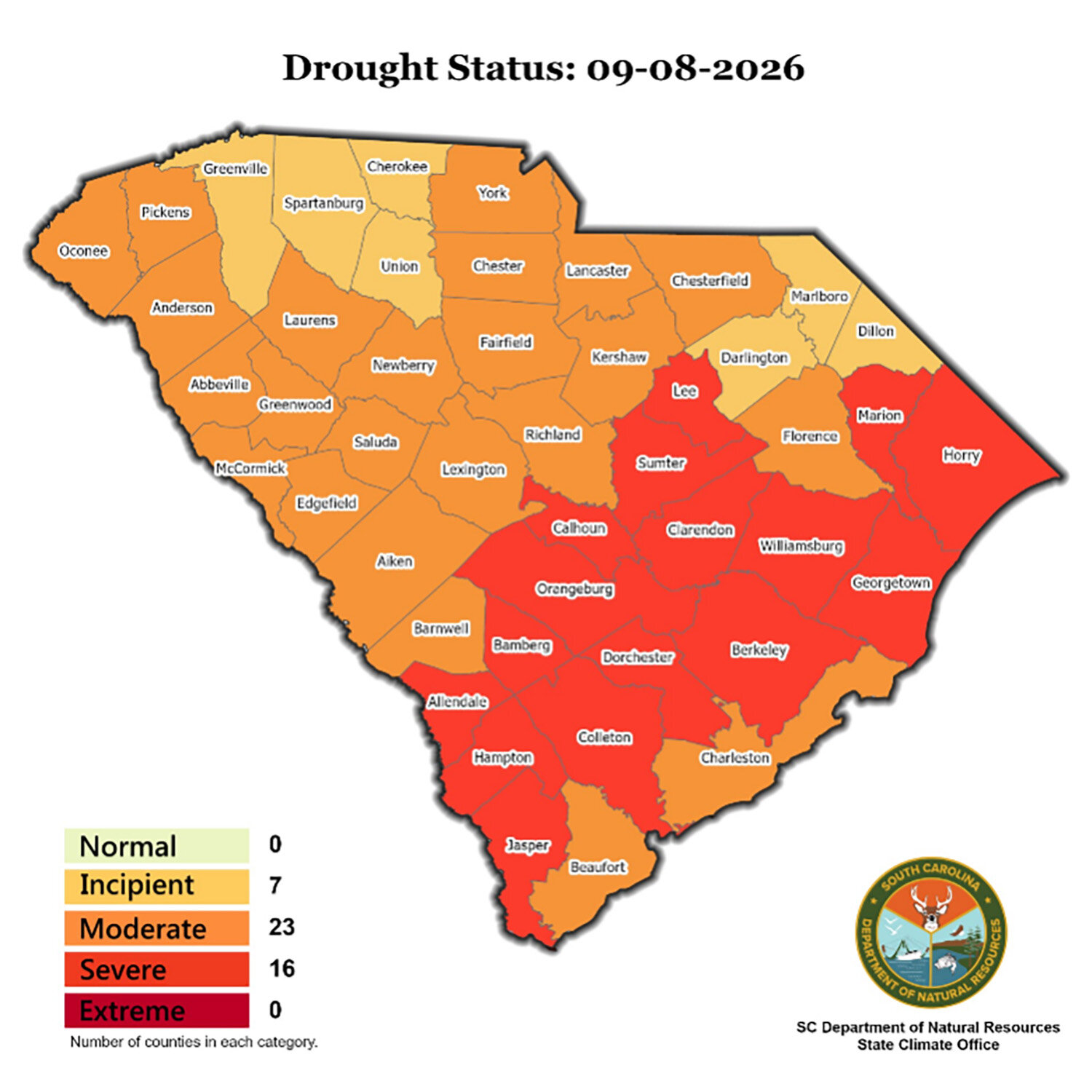
The South Carolina Drought Response Committee (DRC) met on September 8, 2026, to evaluate drought conditions statewide. The DRC is the state’s major drought decision making entity and determines drought severity as defined by the S.C. Drought Response Act to protect the state’s natural resources. The act establishes four levels of drought: incipient, moderate, severe, and extreme. For more information about the DRC and the SC Drought Response Program, visit scdrought.com.The Drought Response Committee (DRC) reviewed all drought indicators and voted to change the drought status of 12 counties. The drought status improved for nine counties and deteriorated for three counties. There was no change in drought status for all other counties.
Abbeville, Anderson, and McCormick were upgraded from Incipient to Moderate Drought; Cherokee, Darlington, Dillon, Greenville, Marlboro, Spartanburg and Union were downgraded from Moderate to Incipient Drought; and Charleston and Florence were downgraded from Severe to Moderate Drought.
According to the South Carolina State Climatology Office, summer rainfall has been beneficial, but not enough to completely recover from the long-term drought impacts. Over the past month, some counties saw improvement, while others slipped back into a higher level of drought. Approximately, one-third of the state continues to deal with severe drought conditions.
Above normal temperatures are contributing to the drought by increasing evaporation from soil, lakes, and rivers. Soils are drying out faster, leaving less moisture available for crops and plants. This has led to an increase in water demand for homeowners and agriculture. During the hot summer months, at least one inch of rainfall is needed per week to offset losses from evaporation. Therefore, the heat and scattered rainfall continue to take a significant toll on agriculture statewide.
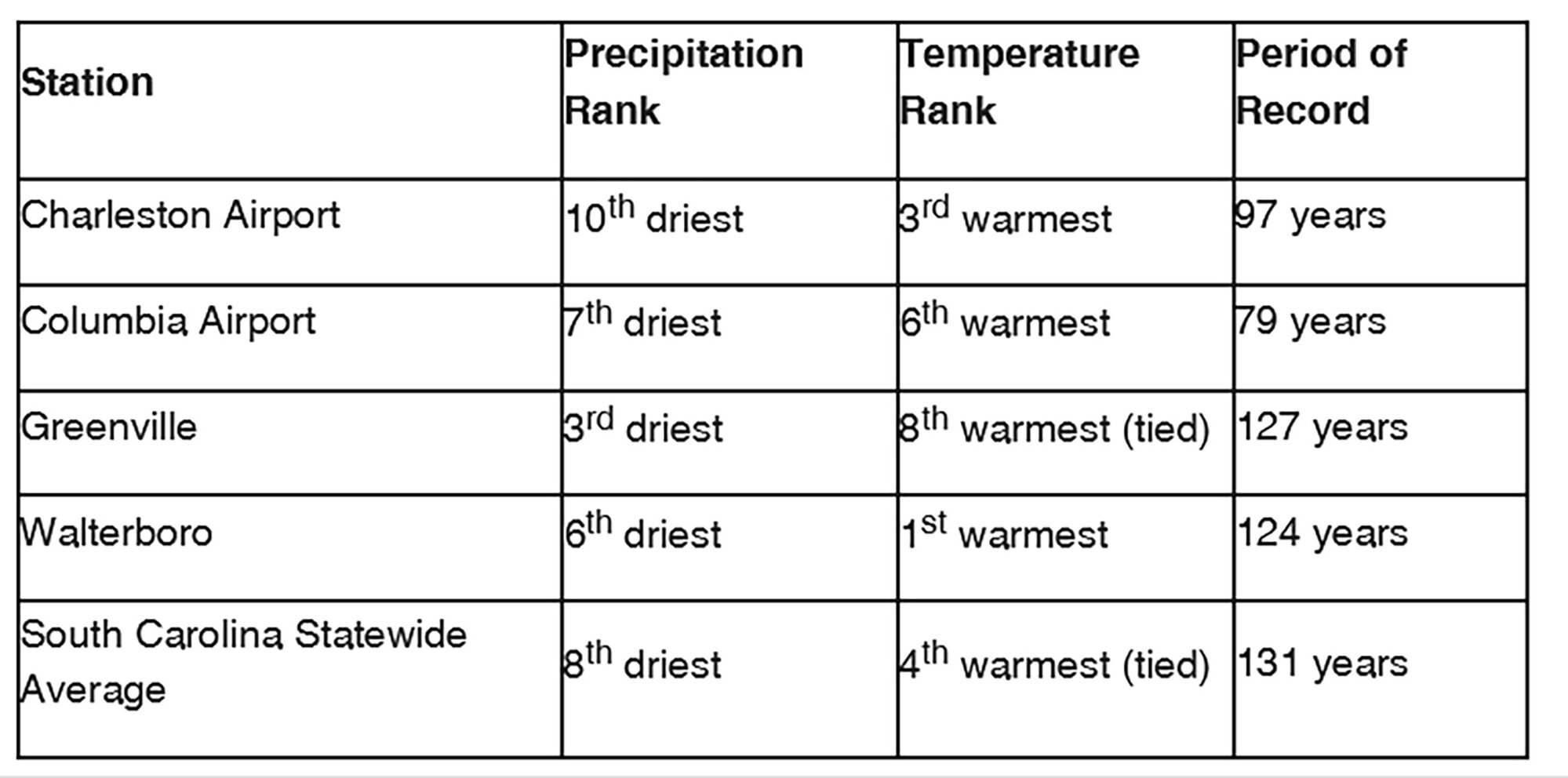
Some locations are reporting the top ten driest and warmest summer (June – August) on record (see chart).
Summer showers are highly variable with some locations within the same county receiving 3.00” of rain from one thunderstorm and no rain reported just a few miles away. From Aug. 1 to Sept. 9, rainfall in Orangeburg County ranges from 3.03” at Orangeburg 0.4 NNW to 11.57” at North 5.2 E. Rainfall amounts were higher, with widespread coverage, in areas where the drought status improved. For the three counties (Abbeville, Anderson and McCormick) that slipped back into a higher level of drought, August rainfall was less than 30% of normal.
The SC Department of Environmental Services provided an overview of hydrologic conditions across the State. Below normal streamflow levels and continued declines in reservoir storage volumes for Lake Hartwell and Lake Thurmond supported an upgrade in drought status from Incipient to Moderate for the counties of Anderson, Abbeville and McCormick in the Western Drought Management Area. The upper counties of the Central Drought Management Area have experienced sustained improvement in streamflow levels which supported the improvement in drought status from Moderate to Incipient for the counties of Spartanburg, Greenville, Union, and Cherokee Counties. In the Northeast Drought Management Area, modest improvements in streamflow conditions supported an improvement in drought status from Moderate to Incipient for Dillon and Marlboro counties and improvements from Severe to Moderate for Florence County.
According to the Forestry Commission, during August wildfire occurrence across the state was substantially above normal, with the number of wildfires 56% above the five-year average. Acres burned in wildfires were 202% above the five-year average, but high relative humidity moderated fire conditions somewhat. As we enter what is usually a dry period of the year in the fall, when plants transition into dormancy, conditions could quickly become more favorable for an increased wildfire threat, and everyone should be careful when conducting any outdoor burning and make sure they adhere to applicable laws and regulations.
The S.C. Drought Response Committee will continue to closely monitor conditions and reconvene on October 13, 2026.